Homemade Spelt Ramen Noodles with Light Miso Broth

Servings: 4 Total Time: 1 hr 5 mins Difficulty: Medium
Fresh spelt noodles in a light miso broth, with make-ahead options
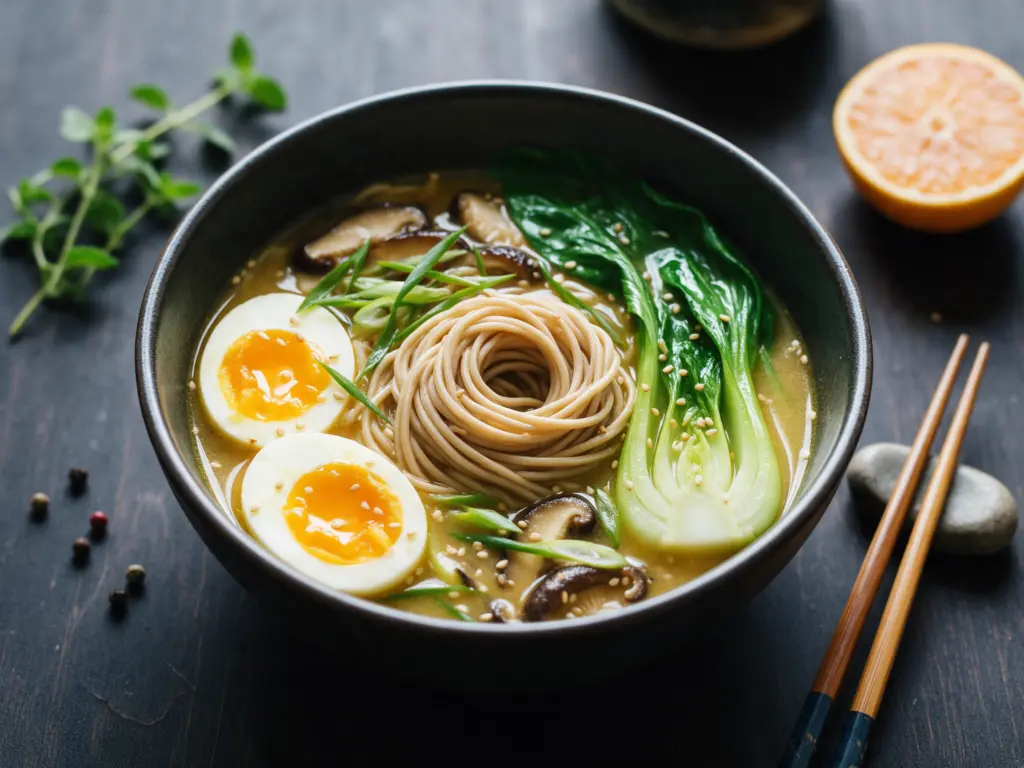
Overhead view of spelt ramen in miso broth with halved jammy eggs, bok choy and sesame in a dark ceramic bowl View Gallery 2 photos

Spelt ramen noodles with miso broth is a bowl built from two simple parts: fresh noodles made with white spelt flour and a light broth finished with white miso. The dough takes about 12 minutes to mix and knead. The broth simmers while the dough rests, so the whole bowl is ready in about 65 minutes.

Spelt gives the noodles a soft bite and a faint nutty flavor. They are less springy than wheat ramen, and that suits a clean broth. The flavors stay balanced.

The miso goes in last, off the heat. If you boil it, the broth turns dull and slightly grainy, so stir it in once the pan is off the burner.
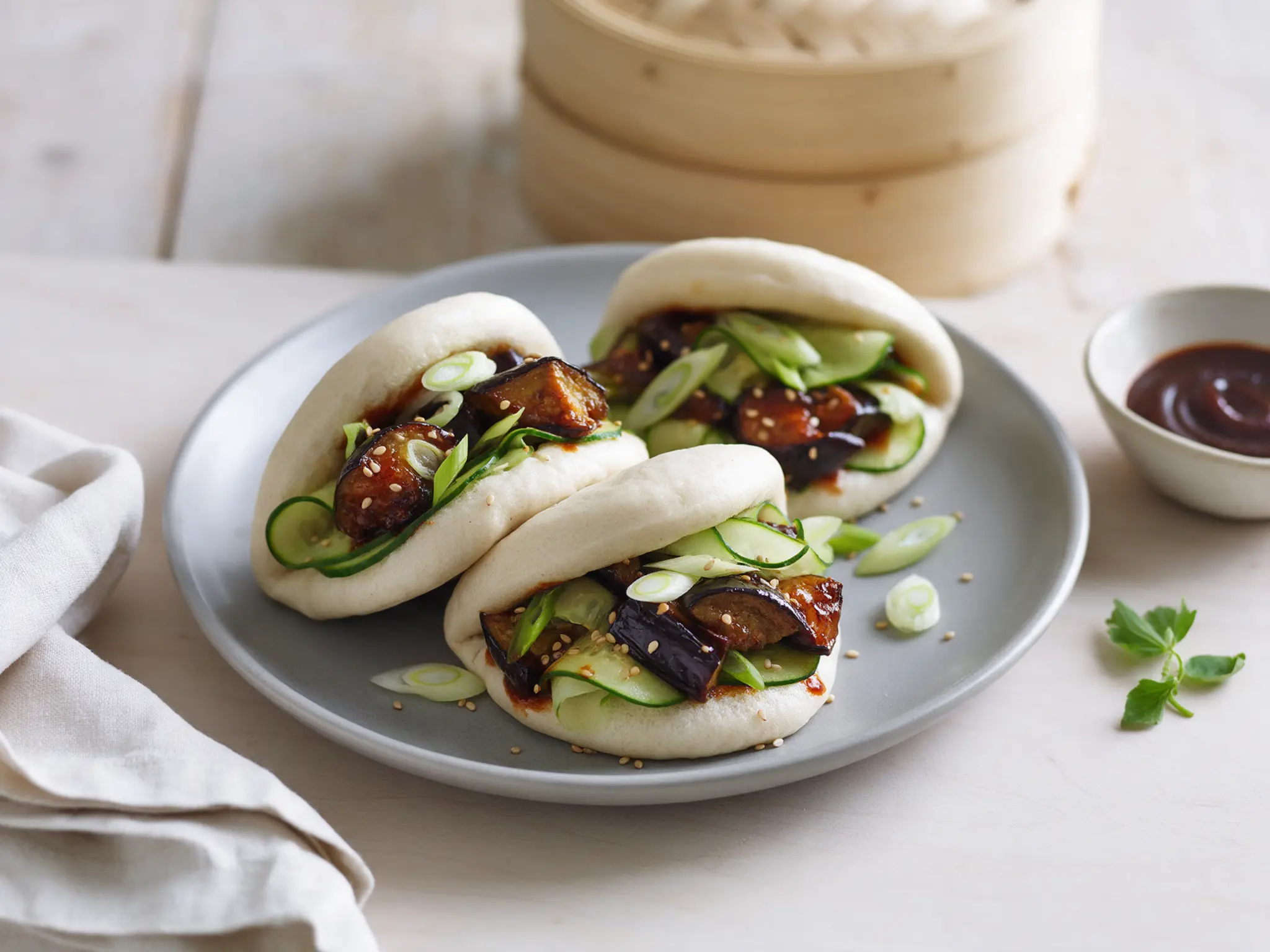
You can cut and freeze the noodles in advance. The broth keeps for four days. The steps stay clear, even if you have never made noodles before.

Why You’ll Love This Recipe

  • Fresh noodles need only flour, water, salt and baking soda
  • The broth simmers while the dough rests, so timing stays simple
  • Raw noodles freeze well, so a second batch is ready later
  • Soft, nutty noodles sit in a clean, savory broth
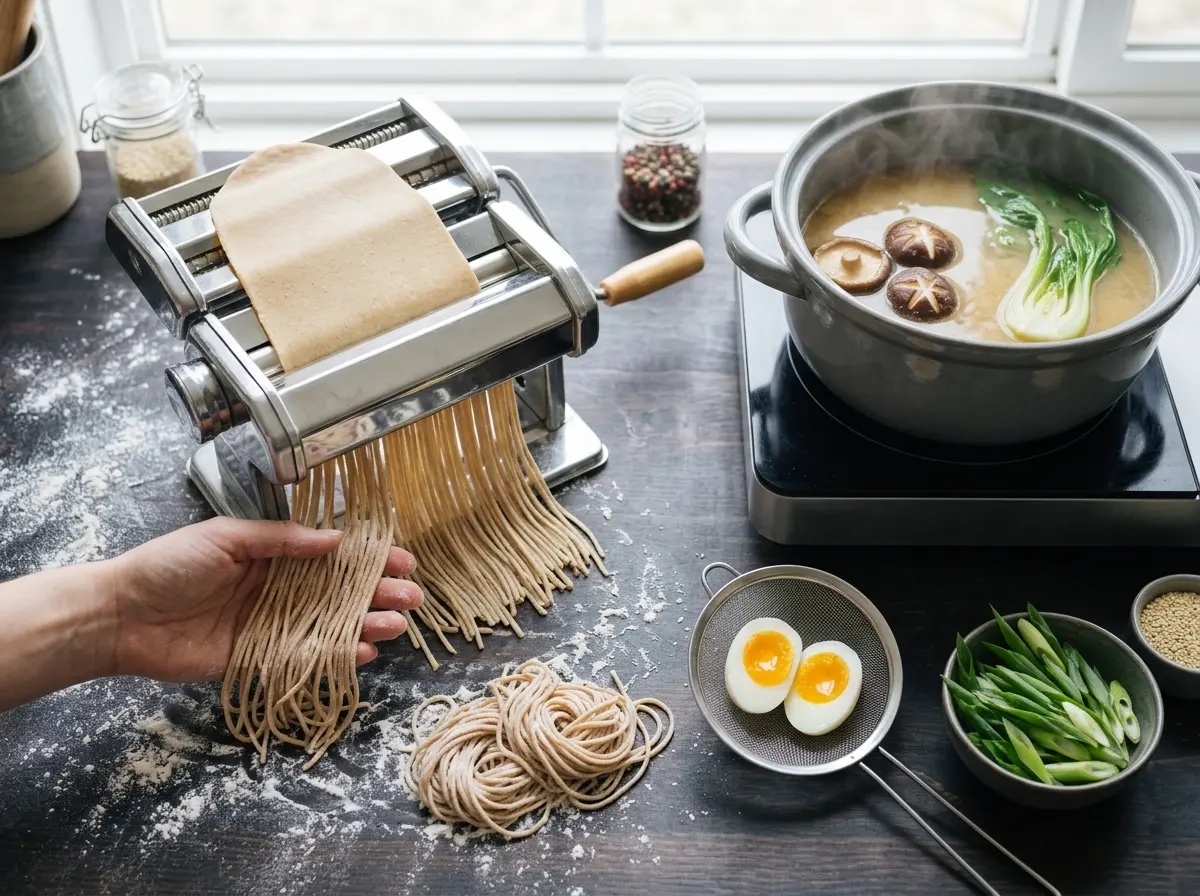
Hands feeding a sheet of spelt dough through a steel pasta machine, with floured cut strands resting beside it

Ingredient Notes

  • white spelt flour: White (sifted) spelt gives the smoothest noodles. Whole spelt works for up to half the flour, but add 15 to 20 ml more water.
  • baking soda: It raises the dough’s alkalinity, which gives a pale yellow color and a slightly firmer chew, similar to kansui. Do not add more than the amount listed or the noodles taste soapy.
  • white miso: White (shiro) miso is mild and slightly sweet. Yellow miso also works, but use 2 tbsp first and taste, since it is saltier.
  • dried shiitake: They give the broth its savory depth. Fresh shiitake can replace them, but use 150 g and expect a lighter flavor.
  • vegetable stock: Choose low-sodium stock. The miso and soy sauce already add plenty of salt.
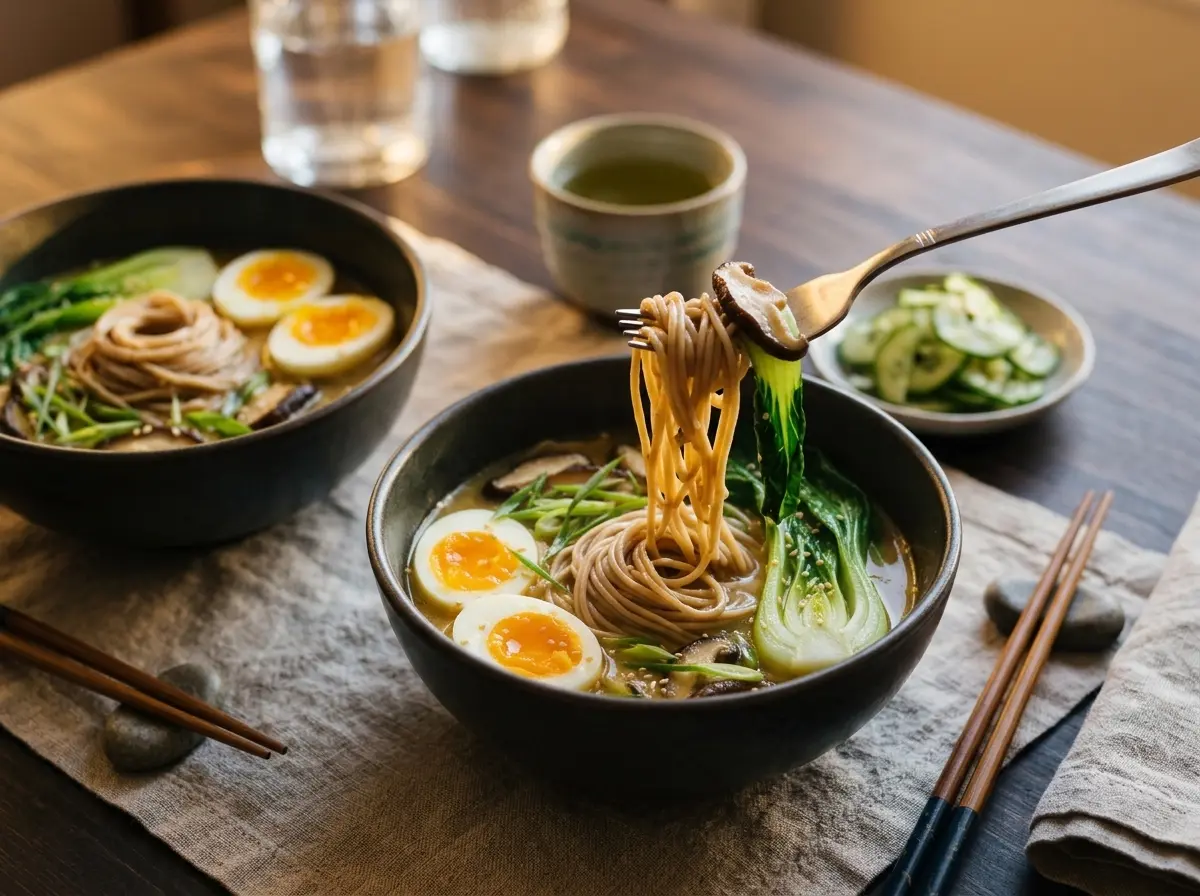
Two bowls of ramen on a linen-covered table with chopsticks, a small cucumber salad and a cup of green tea

Difficulty: Medium Prep Time 27 mins Cook Time 8 mins Rest Time 30 mins Total Time 1 hr 5 mins
Servings: 4 Estimated Cost: £ 2.10 Calories: 472

Description

White spelt flour and a little baking soda make noodles with a soft bite, while white miso added off the heat keeps the broth smooth and savory.

Ingredients

Cooking Mode Disabled

Spelt ramen noodles

Miso broth

Toppings

Instructions

Make the noodle dough

  1. Stir the salt and baking soda into 170 ml lukewarm water until dissolved. Put 400 g spelt flour in a large bowl, pour in the water and mix with your hand until a shaggy dough forms.
  2. Knead on a clean counter for 8 minutes, until the dough is smooth and firm. It will feel stiff, and that is correct. Wrap it tightly and rest at room temperature for 30 minutes.

Cook the broth and eggs while the dough rests

  1. Heat the oil in a 3-quart / 2.8 L saucepan over medium heat. Add the garlic, ginger and spring onion whites and cook for 2 minutes, until fragrant. Pour in the stock, then add the shiitake, soy sauce and mirin. Bring to a gentle simmer and cook for 20 minutes.
  2. Bring a 5-quart / 4.7 L pot of water to a boil. Lower in the eggs and boil for 7 minutes for a set white and a jammy yolk. Move them to a bowl of ice water for 5 minutes, then peel. Leave the pot of water on the counter.
  3. Lift the shiitake from the broth, discard the stems and slice the caps thin. Pour the broth through a fine-mesh sieve back into the saucepan and keep it warm over the lowest heat.

Roll and cut the noodles

  1. Cut the rested dough into 4 pieces and flatten each with your palm. Roll or pass each piece through a pasta machine until about 1.5 mm thick. Dust both sides with flour, fold loosely and slice into 3 mm strands. Toss the strands in flour and shake off the excess.

Finish and serve

  1. Return the egg pot to a rolling boil. Cook the noodles for 2 to 3 minutes, until tender with a slight chew and no white core. Add the bok choy for the last 60 seconds. Drain well.
  2. Take the broth off the heat. Ladle about 250 ml into a bowl, whisk in the miso until smooth, then stir it back into the pan with the sesame oil. Do not let the broth boil again.
  3. Divide the noodles and bok choy among 4 warm bowls and ladle over the broth. Top with halved eggs, sliced shiitake, spring onion greens and sesame seeds. Serve at once, with chili oil if you like.

Nutrition Facts

Servings 4


Amount Per Serving
Calories 472kcal
% Daily Value *
Total Fat 15g24%
Saturated Fat 3.5g18%
Cholesterol 185mg62%
Sodium 1350mg57%
Potassium 650mg19%
Total Carbohydrate 80g27%
Dietary Fiber 5g20%
Sugars 4g
Protein 25g50%

Vitamin A 1500 IU
Vitamin C 15 mg
Calcium 110 mg
Iron 4 mg
Vitamin D 40 IU
Vitamin E 1.2 mg
Vitamin K 30 mcg
Thiamin 0.3 mg
Riboflavin 0.4 mg
Niacin 5 mg
Vitamin B6 0.3 mg
Folate 70 mcg
Vitamin B12 0.5 mcg
Phosphorus 380 mg
Magnesium 90 mg
Zinc 3.2 mg

* Percent Daily Values are based on a 2,000 calorie diet. Your daily value may be higher or lower depending on your calorie needs.

Note

Additional Notes

  • Start the broth as soon as the dough is wrapped. Both finish around the same time.
  • Use low-sodium stock. The miso and soy sauce already bring plenty of salt.
  • Cut noodles evenly at 3 mm wide so they cook at the same pace.
  • Keep the egg pot of water. It becomes the noodle pot.

Keywords: spelt ramen noodles, homemade ramen noodles, miso broth, spelt noodles, miso ramen

Equipment

  • 3-quart / 2.8 L saucepan
  • 5-quart / 4.7 L pot
  • pasta machine or long rolling pin
  • kitchen scale
  • fine-mesh sieve
  • sharp chef's knife

Tips

  • Weigh the flour and water on a scale. Spelt dough is stiff, and a 20 ml difference changes how the noodles chew.
  • Rest the wrapped dough for the full 30 minutes so the spelt hydrates and relaxes, which keeps the sheets from tearing when rolled.
  • Roll the dough to about 1.5 mm and dust each sheet with flour before folding, so the cut strands separate instead of sticking.
  • Whisk the miso into one ladle of hot broth off the heat, then stir it back in to keep the broth smooth.
  • Boil the noodles in their own pot of water, not in the broth, so surface starch does not cloud the soup.

Variations

  • Add 200 g pan-fried firm tofu cubes and a handful of sweetcorn for a vegan bowl, and skip the eggs.
  • Stir 1 tbsp chili crisp or a spoonful of kimchi into each bowl for a spicier broth with some tang.
  • Swap half the white spelt for whole spelt flour and add 15 to 20 ml water for a nuttier, chewier noodle.

Storage and Reheating

Spelt ramen keeps best as separate parts. Store the strained miso broth in a sealed container in the fridge for 3 to 4 days. Keep the eggs in their shell, refrigerated, and use them within 2 days.

Reheat the broth in a saucepan over medium-low heat for about 5 minutes, until steaming. Keep it below a boil so the miso stays smooth. Cook the noodles fresh each time, because noodles left sitting in broth turn soft and swollen.

Uncooked noodles keep in the fridge for 24 hours, tossed in flour in a covered container. For longer storage, freeze them in loose nests on a tray, then bag them for up to 1 month. Cook them from frozen for 3 to 4 minutes.

Serving Suggestions

Serve spelt ramen straight away in warmed bowls. Put the noodles in first, add the bok choy, then ladle over the hot broth. The noodles stay tender and the broth stays hot until the last bite.

Top each bowl with halved eggs, sliced shiitake, spring onion greens and sesame seeds. A spoonful of chili oil at the table suits anyone who wants more heat.

A quick cucumber salad with rice vinegar, steamed edamame or pan-fried gyoza fit alongside. The bowl is filling on its own, so the sides can stay light.

Frequently Asked Questions

Expand All:

Why does my miso broth taste flat or turn grainy?

Boiling is the usual cause. Heat dulls miso's aroma, and paste dropped straight into the pot stays lumpy. Take the pan off the heat, whisk the miso into one ladle of hot broth until smooth, then stir it back in. Taste before adding more soy sauce.

Can I use whole spelt flour instead of white spelt flour for ramen noodles?

Yes, but expect a denser, darker noodle. Replace up to half the white spelt with whole spelt and add 15 to 20 ml more water, since the bran absorbs extra liquid. Rest the dough the full 30 minutes. Noodles made with all whole spelt tear more easily when rolled thin.

Can I freeze spelt ramen noodles before cooking them?

Yes, raw spelt noodles freeze well for up to 1 month. Toss them in flour, shape loose nests, freeze on a tray until firm, then bag them. Cook straight from frozen in boiling water for 3 to 4 minutes. Do not thaw them first, or the strands stick together.

What goes well with spelt miso ramen?

Light, cool sides work best. A cucumber salad with rice vinegar, steamed edamame or pan-fried gyoza all suit the bowl. The ramen already holds noodles, egg and greens, so one small side is enough. Green tea or plain sparkling water keeps the meal clean.

Is spelt ramen gluten free?

No. Spelt is a type of wheat and contains gluten, so these noodles are not suitable for celiac disease or a gluten-free diet. For a gluten-free bowl, serve the miso broth over rice noodles. Check that the miso and the soy sauce or tamari are labeled gluten free.

How are spelt ramen noodles different from regular ramen noodles?

Spelt noodles have a softer bite and a mild nutty flavor, while regular ramen noodles are springier. Traditional ramen dough uses kansui, an alkaline solution, for its yellow color and chew. A small amount of baking soda gives these noodles a similar tint, though the texture stays more tender.

Min
Share it on your social network