Homemade Spelt Pierogi with Potato and Onion Filling

Servings: 4 Total Time: 1 hr 15 mins Difficulty: Medium
Soft spelt dough, creamy potato filling, and a golden pan-fried finish
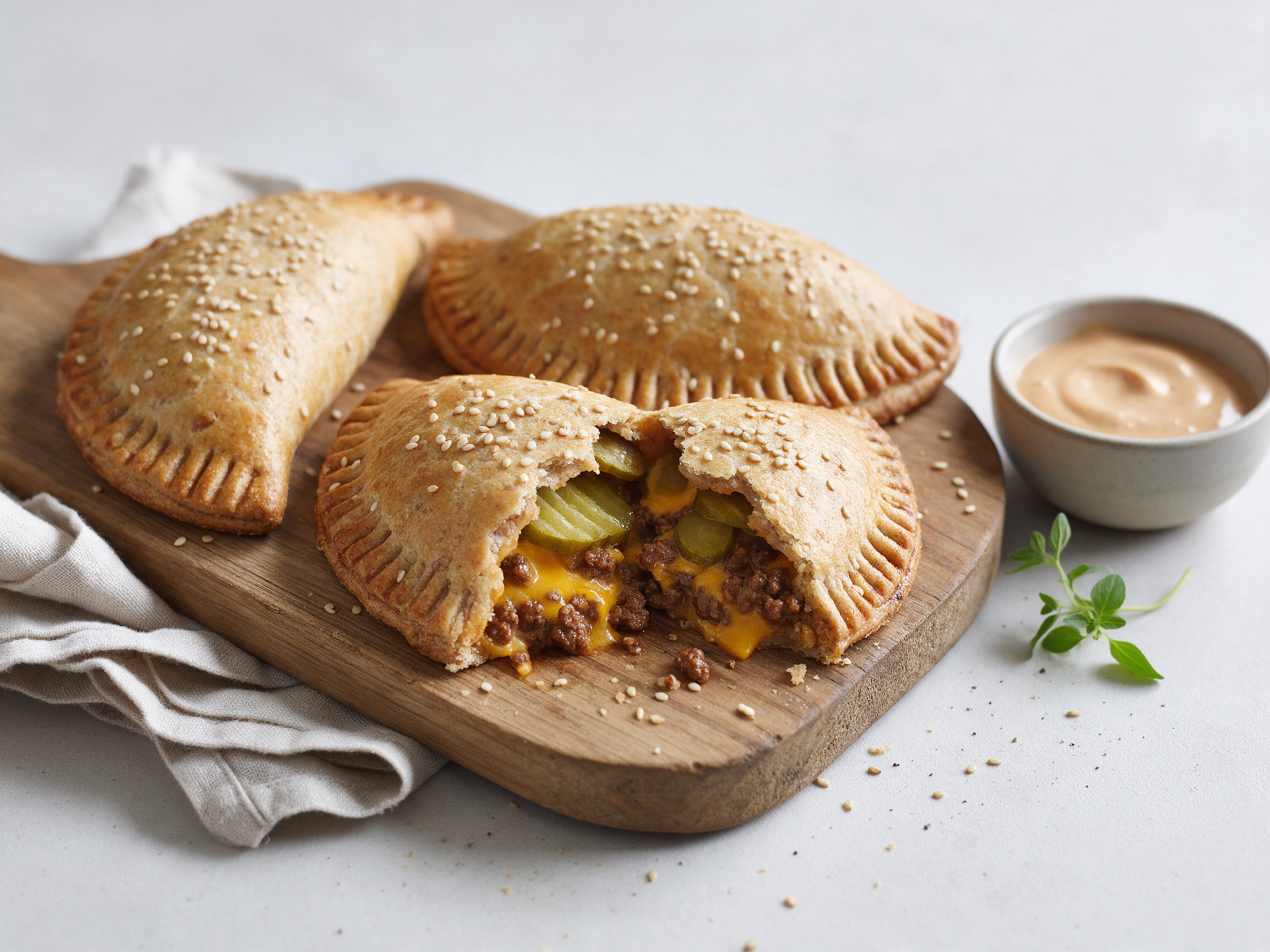
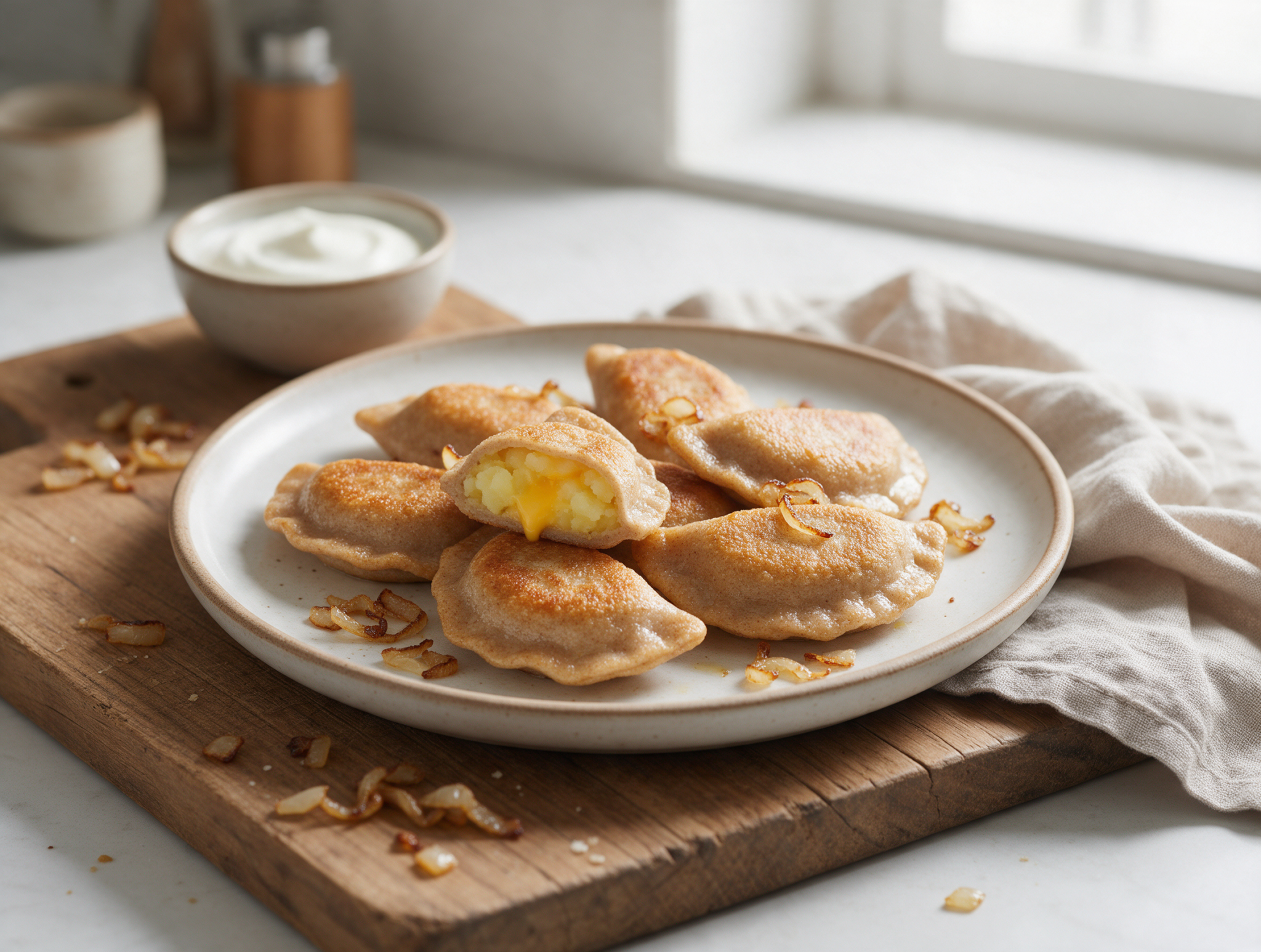
Golden pan-fried spelt pierogi with potato filling on a wooden board, topped with fried onion and a side of sour cream. View Gallery 2 photos

Spelt pierogi with potato are soft dumplings made from a whole-grain spelt dough, filled with mashed potato and cheese, then boiled and pan-fried until golden. The dough stays tender because spelt has less gluten than regular flour, so it rolls out easily and holds its shape once boiled.

This version keeps the filling simple: potato, cheddar, and a little sautéed onion. You can prepare the dough and filling a day ahead, then assemble and cook when you’re ready to eat.

The pierogi go into simmering water first, then finish in a hot skillet with butter and onion. That second step gives them a crisp edge without drying out the inside.
One thing to watch: if the dough is rolled too thin, the pierogi can split open in the boiling water. Roll it to about 2 mm and you’ll get a sturdy wrapper that still stays soft to bite.

Why You’ll Love This Recipe

  • Whole-grain spelt dough stays soft, not gummy
  • Filling comes together from pantry staples
  • Freezes well for quick weeknight meals
  • Pan-fried finish adds a crisp edge
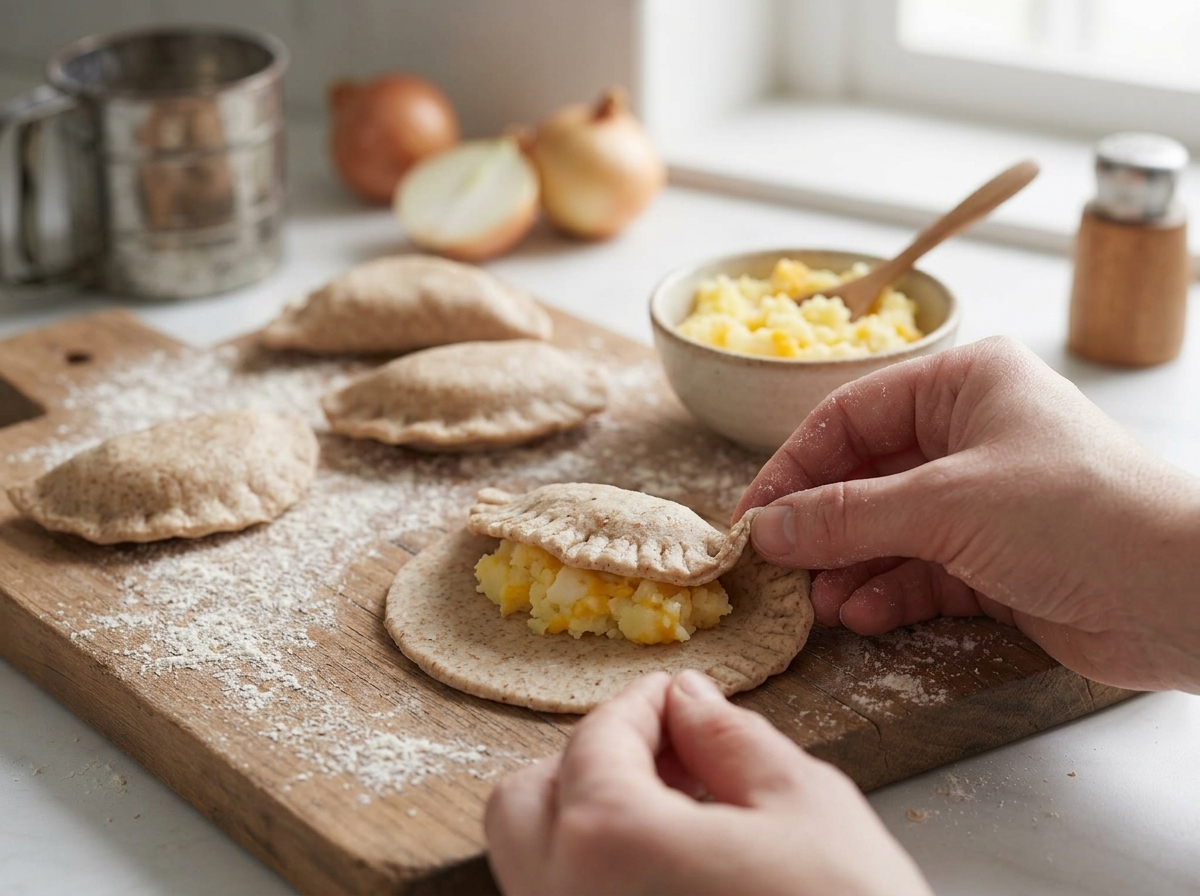
Hands sealing crimped edges of spelt pierogi dough filled with mashed potato and cheddar on a floured wooden board.

Ingredient Notes

  • Spelt flour: Gives a nuttier flavor and lighter chew than all-purpose flour. Whole grain or light spelt both work here.
  • Potatoes: Starchy potatoes like Yukon Gold mash smoother than waxy varieties and hold the filling together better.
  • Cheddar cheese: Sub farmer’s cheese or twarog for a more traditional Eastern European filling.
  • Egg: Helps bind the dough and keep it pliable. You can omit it and add 1-2 extra tbsp water for a firmer, more traditional wrapper.
  • Onion: Divided between the filling and the topping, sautéed in butter for sweetness rather than added raw.
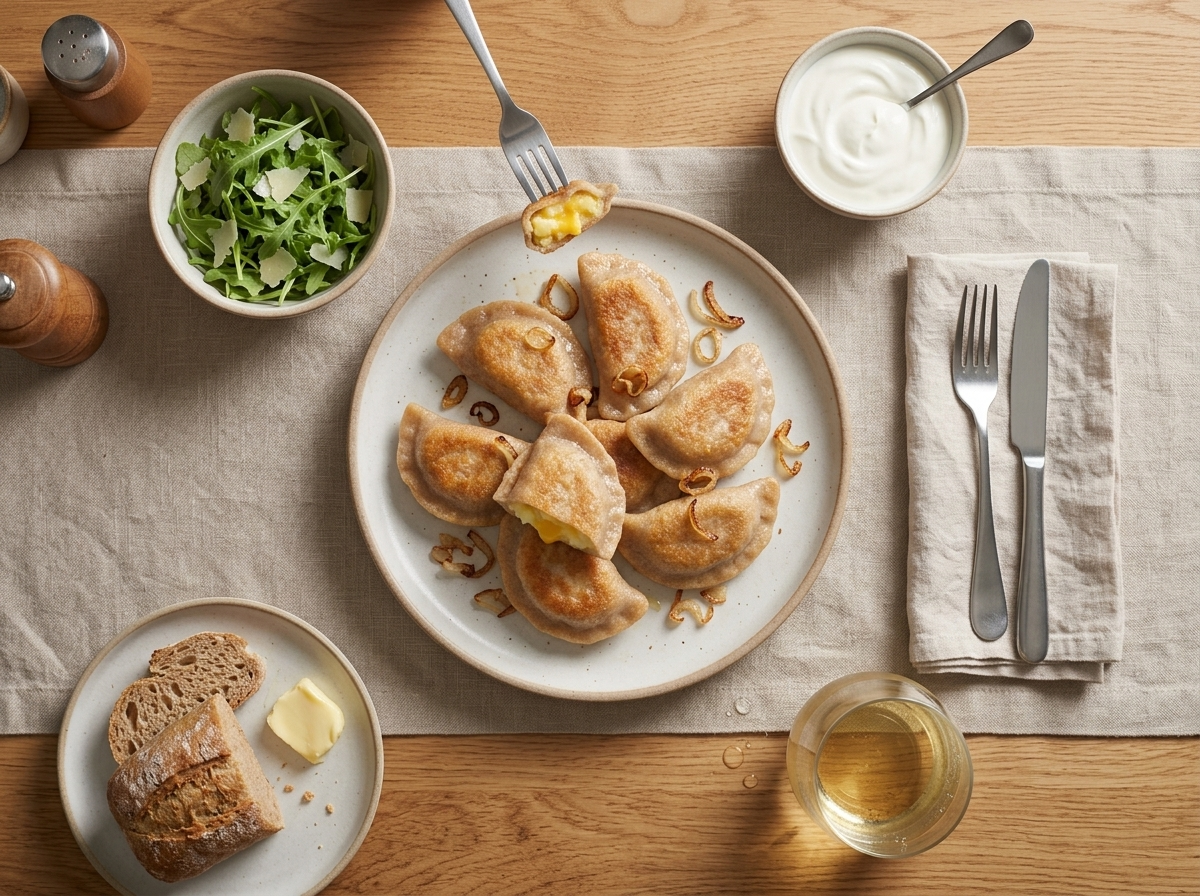
A linen-covered table with a plate of spelt pierogi, a glass of white wine, and a fork mid-bite in warm light.

Difficulty: Medium Prep Time 35 mins Cook Time 20 mins Rest Time 20 mins Total Time 1 hr 15 mins
Cooking Temp: 180  C Servings: 4 Estimated Cost: £ 1.50 Calories: 506

Description

This dough uses whole-grain spelt for a soft, slightly nutty wrapper around a simple mashed potato and cheddar filling, boiled then finished in a hot skillet with butter and onion.

Ingredients

Cooking Mode Disabled

Dough

Potato Filling

For Frying

Instructions

Make the Dough

  1. Whisk the spelt flour and salt together in a mixing bowl.
  2. Make a well in the center and add the egg, olive oil, and warm water. Mix until a shaggy dough forms.
  3. Turn the dough onto a floured surface and knead for 5 to 6 minutes until smooth and elastic. Cover and rest for 20 minutes.

Make the Potato Filling

  1. Boil the potato cubes in salted water for 12 to 15 minutes until fork-tender. Drain and mash while still hot.
  2. Sauté the diced onion in 20 g butter over medium heat for 4 to 5 minutes until soft. Stir into the mash with the cheddar, salt, and pepper. Let cool before filling.

Assemble the Pierogi

  1. Roll the rested dough to about 2 mm thickness on a floured surface. Cut rounds with a 9 cm / 3.5-inch cutter.
  2. Spoon about 1 tsp of cooled filling onto each round. Fold in half and pinch the edges firmly to seal, checking for gaps.

Cook the Pierogi

  1. Bring the stockpot of salted water to a gentle boil. Add pierogi in batches of 8 to 10 so the water keeps simmering.
  2. Boil until they float, then continue for 2 to 3 more minutes. Remove with a slotted spoon and drain well.
  3. Melt the remaining 20 g butter in the skillet over medium heat. Add the sliced onion and cook for 3 to 4 minutes until golden.
  4. Add the drained pierogi to the skillet and cook for 2 to 3 minutes per side until golden brown and crisp at the edges. Serve warm.

Nutrition Facts

Servings 4


Amount Per Serving
Calories 506kcal
% Daily Value *
Total Fat 18g28%
Saturated Fat 8g40%
Cholesterol 68mg23%
Sodium 700mg30%
Potassium 520mg15%
Total Carbohydrate 83g28%
Dietary Fiber 7g29%
Sugars 4g
Protein 20g40%

Vitamin A 300 IU
Vitamin C 15 mg
Calcium 150 mg
Iron 3 mg
Vitamin E 1.5 mg
Vitamin K 3 mcg
Thiamin 0.2 mg
Riboflavin 0.15 mg
Niacin 3 mg
Vitamin B6 0.3 mg
Folate 40 mcg
Vitamin B12 0.3 mcg
Phosphorus 200 mg
Magnesium 40 mg
Zinc 1.5 mg

* Percent Daily Values are based on a 2,000 calorie diet. Your daily value may be higher or lower depending on your calorie needs.

Note

Additional Notes

  • Rest dough 20 minutes before rolling for easier shaping.
  • Cool filling before assembling so the dough doesn't turn sticky.
  • Seal edges tightly to prevent splitting during boiling.
  • Boil in batches of 8 to 10 to keep water at a steady simmer.
Keywords: spelt pierogi, potato pierogi, spelt dumplings, homemade pierogi, spelt potato filling

Equipment

  • rolling pin
  • 9 cm / 3.5-inch round cutter
  • 5-quart / 4.7 L stockpot
  • 12-inch / 30 cm skillet
  • mixing bowls
  • slotted spoon

Tips

  • Rest the dough for 20 minutes before rolling so it stays elastic and doesn't spring back when you cut rounds.
  • Seal edges firmly with a fork or your fingers, gaps let filling escape while the pierogi boil.
  • Boil pierogi in batches of 8 to 10 so the water stays at a steady simmer.
  • Let boiled pierogi drain fully before pan-frying, extra water splatters in hot butter and stops browning.
  • Cook the filling onion until soft and golden, raw onion turns the filling watery once boiled.

Variations

  • Swap cheddar for farmer's cheese and stir in fresh dill for a more traditional Eastern European filling.
  • Add sautéed mushrooms to the potato filling for an earthier flavor and extra texture.
  • Skip the pan-fry step and toss boiled pierogi in melted butter with crispy onion instead.

Storage and Reheating

Cooked pierogi keep in the fridge for 3-4 days in a sealed container. Reheat in a skillet with a little butter over medium heat for 3-4 minutes per side, until warmed through and the edges crisp again.

For longer storage, freeze uncooked, filled pierogi on a tray until firm, then move them to a freezer bag for up to 2 months. Boil straight from frozen for 5-6 minutes, then pan-fry as usual.

Serving Suggestions

Spelt pierogi with potato taste best straight from the skillet, topped with a spoonful of sour cream and a scatter of fried onion.

For a heartier plate, add crispy bacon bits or a side of steamed green beans. A simple cucumber and dill salad keeps the meal balanced.

These also work as a light lunch on their own, with just butter and black pepper.

Frequently Asked Questions

Expand All:

Why did my spelt pierogi fall apart in the boiling water?

Pierogi split open when the dough is rolled too thin or the edges aren't sealed tightly. Roll spelt dough to about 2 mm and pinch the edges firmly with your fingers or a fork. Boiling too many at once also drops the water temperature and can cause the seams to open.

Can I use regular flour instead of spelt for the pierogi dough?

Yes, all-purpose flour works as a straight swap in the same amount. The dough will feel slightly stretchier and less nutty in flavor than spelt, but it rolls and seals the same way. Spelt gives a softer bite and a light wheat flavor that plain flour doesn't have.

Can I freeze spelt pierogi with potato filling before cooking?

Yes, freeze the uncooked, filled pierogi on a tray until solid, then transfer them to a bag for up to 2 months. Boil straight from frozen, adding 2 to 3 extra minutes to the water time. This makes the dish easy to prep ahead for a weeknight dinner.

What goes well with spelt pierogi with potato?

Sour cream, crispy bacon bits, and a simple cucumber salad all work well alongside spelt pierogi. Fried onion on top adds sweetness, and a side of steamed green beans keeps the plate light. A cold glass of buttermilk is a classic pairing too.

Are spelt pierogi gluten free?

No, spelt pierogi are not gluten free. Spelt is a wheat relative and contains gluten, so this recipe isn't suitable for anyone avoiding gluten. If you need a gluten-free version, swap in a gluten-free flour blend, though the dough will feel more delicate to roll and seal.

What's the difference between spelt pierogi and traditional Polish pierogi?

Traditional Polish pierogi use plain wheat flour, while this version swaps in spelt for a nuttier flavor and softer texture. The filling and cooking method stay the same, boiled then pan-fried in butter with onion. Spelt also adds more fiber than a standard flour dough.

Min
Share it on your social network