
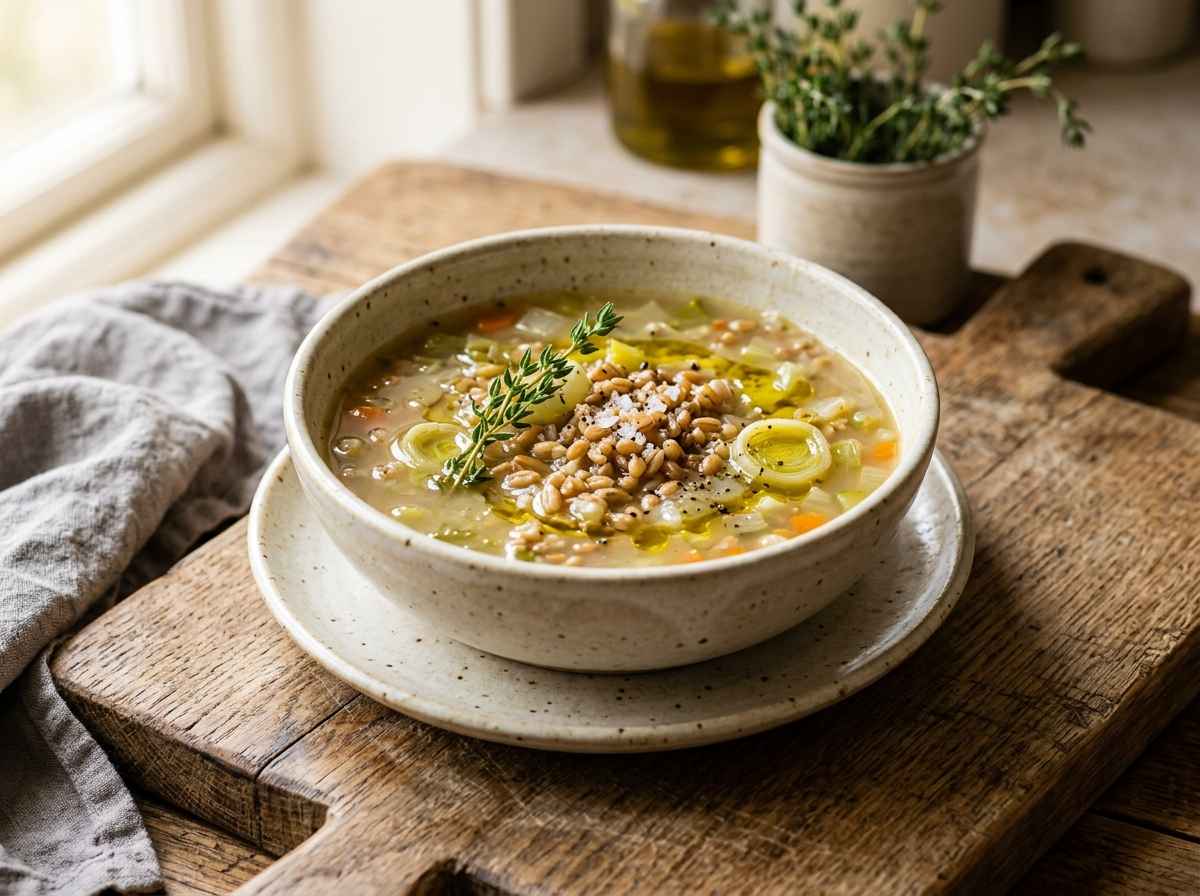
Spelt and leek soup is one of the most straightforward soups you can make on a weeknight. The ingredients are simple, the method is forgiving, and the result is a bowl that stays filling for hours.
The spelt berries cook directly in the broth, releasing starch as they soften and naturally thickening the soup without any cream or flour. That texture stays consistent even the next day.
Leeks are mild enough to let the grain take centre stage. They soften down to something almost silky, which balances the slight bite of the spelt. A little garlic and fresh thyme round out the flavour without crowding it.

This soup works well as a light main with crusty bread, or as a starter before a simple roast. It scales up easily and freezes without losing much texture.
Why You’ll Love This Recipe
- Whole spelt adds fiber and a satisfying chew to every bowl.
- Spelt starch naturally thickens the broth, no cream needed.
- One pot from start to finish, minimal washing up.
- Freezes well and tastes even better the next day.
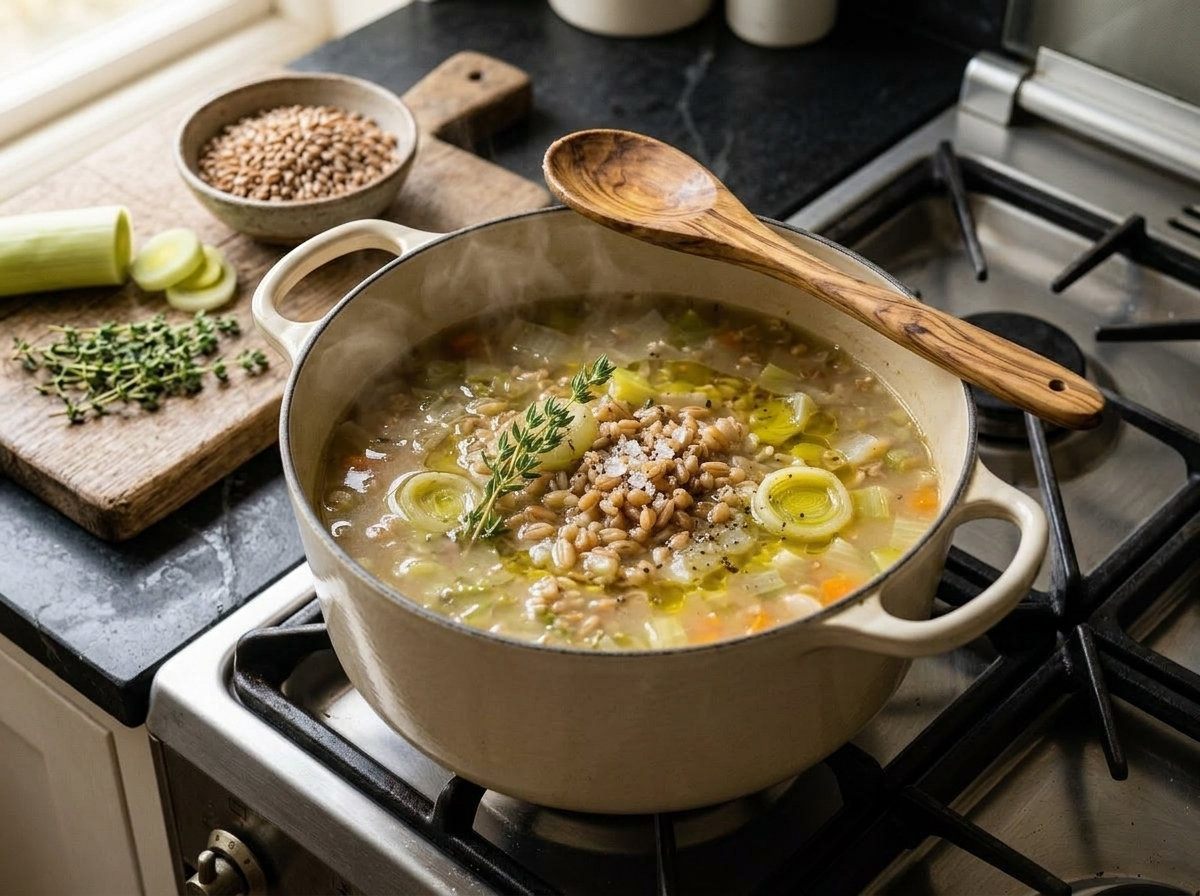
Ingredient Notes
- Whole spelt berries: Use whole spelt berries, not pearled spelt, for maximum fiber and chew. Pearled spelt works too but cooks faster and produces a softer, slightly thinner result.
- Leeks: Use the white and pale green parts for the mildest flavour. Save the dark green tops for stock if you like.
- Vegetable stock: A good-quality low-sodium stock keeps the soup balanced. Chicken stock works if you’re not keeping this vegetarian.
- Garlic: Two cloves is enough here. The leeks are already aromatic, so garlic should stay in the background.
- Fresh thyme: Dried thyme works in a pinch, use half the amount. Strip the leaves before adding so stems don’t end up in the bowl.
- Olive oil: Use a neutral olive oil for sauteing. A finishing drizzle of good extra-virgin oil just before serving adds a clean note.
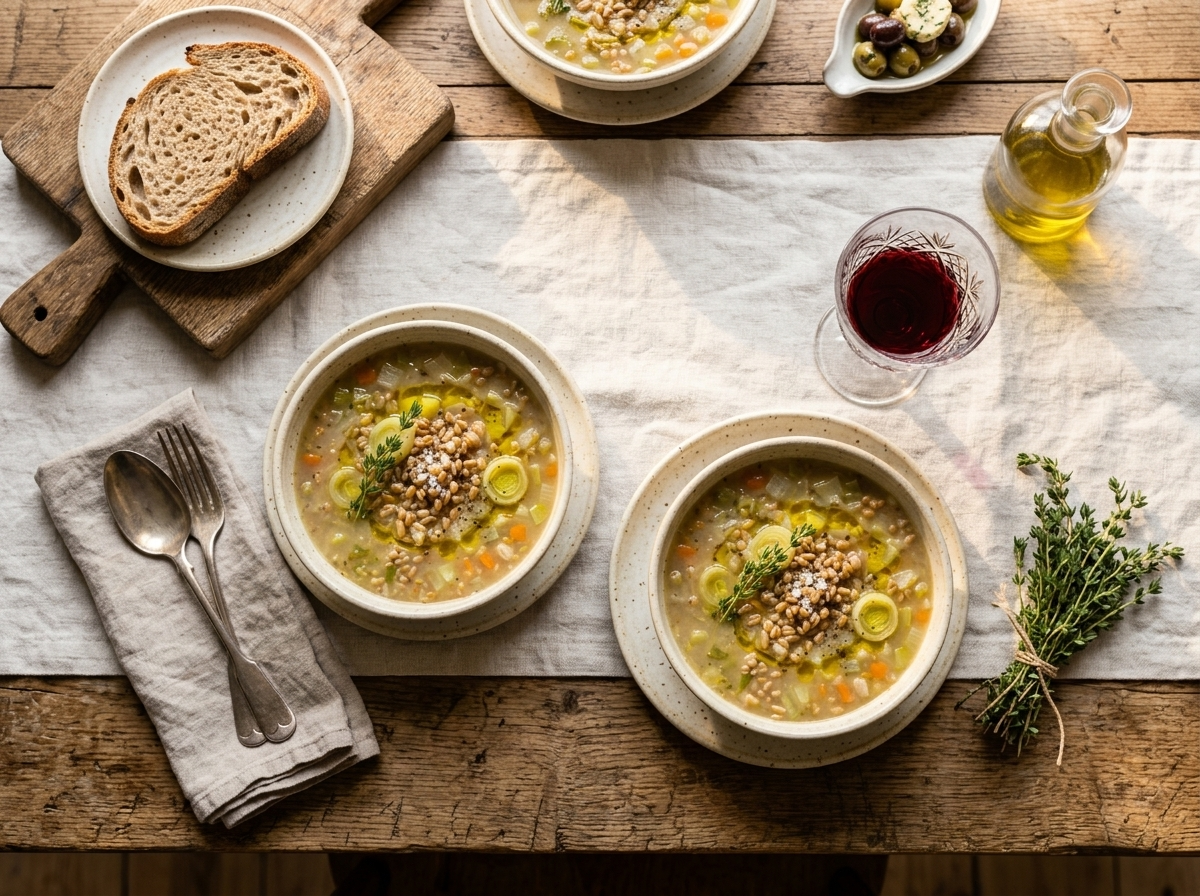
Spelt and Leek Soup
Description
Whole spelt berries give this soup a satisfying chew that pearl barley can't match, while slow-softened leeks keep the broth gentle and slightly sweet.
Ingredients
Instructions
- Rinse the spelt berries under cold water in a fine-mesh sieve. If soaked, drain and set aside.
- Heat 2 tbsp olive oil in a large heavy-bottomed saucepan over medium-low heat.
- Add the sliced leeks and a pinch of salt. Cook for 8 to 10 minutes, stirring occasionally, until completely soft and slightly translucent but not browned.
- Add the chopped garlic and thyme leaves. Cook for 1 minute, stirring constantly, until fragrant.
- Add the rinsed spelt berries and stir to coat in the oil and leek mixture for 1 minute.
- Pour in the vegetable stock and add the bay leaf. Bring to a gentle boil over medium-high heat.
- Reduce heat to low, cover partially with a lid, and simmer for 25 to 30 minutes, until the spelt is tender with a slight bite. If using pre-soaked spelt, check at 20 minutes.
- Remove the bay leaf. Season with 1 tsp salt and black pepper, tasting as you go.
- Ladle into bowls and finish with a drizzle of extra-virgin olive oil and a few extra thyme leaves if desired.
Nutrition Facts
Servings 4
- Amount Per Serving
- Calories 280kcal
- % Daily Value *
- Total Fat 10g16%
- Saturated Fat 1.5g8%
- Sodium 520mg22%
- Potassium 380mg11%
- Total Carbohydrate 42g15%
- Dietary Fiber 6g24%
- Sugars 5g
- Protein 8g16%
- Vitamin A 950 IU
- Vitamin C 12 mg
- Calcium 60 mg
- Iron 3 mg
- Vitamin E 2 mg
- Vitamin K 28 mcg
- Thiamin 0.2 mg
- Riboflavin 0.1 mg
- Niacin 2 mg
- Vitamin B6 0.3 mg
- Folate 45 mcg
- Phosphorus 190 mg
- Magnesium 45 mg
- Zinc 1.8 mg
* Percent Daily Values are based on a 2,000 calorie diet. Your daily value may be higher or lower depending on your calorie needs.
Note
Additional Notes
- Soak spelt berries for 8 hours before cooking to reduce cook time by 10 minutes.
- Do not add salt until the spelt is fully tender to avoid tough, undercooked grains.
- Keep heat at a steady low simmer once stock is added; a rolling boil breaks down the leeks too fast.
- Taste and adjust seasoning only at the end, stock salt levels vary widely between brands.
- A parmesan rind added with the stock deepens flavour without making the soup taste cheesy.