
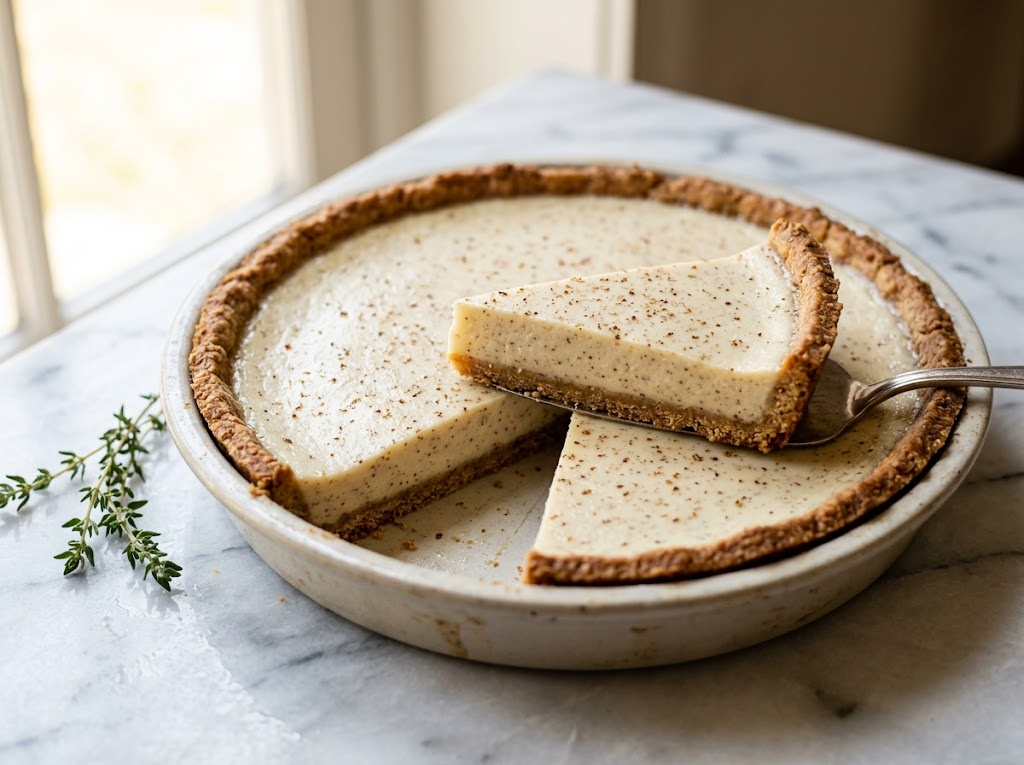
Custard tart has been baked in British kitchens for centuries, but swapping plain flour for spelt changes the pastry in a way you notice immediately. The base stays crisp without feeling brittle, and it carries a faint toasty note that pairs well with the vanilla custard inside.
The filling is a simple pouring custard – eggs, cream, milk, sugar, and a generous scrape of vanilla. Freshly grated nutmeg on top before baking is non-negotiable. It blooms in the oven and gives the tart its characteristic speckled finish.
This is a recipe where patience matters more than technique. Blind-baking the shell properly and keeping the oven temperature steady are the two steps that separate a clean slice from a soggy one.
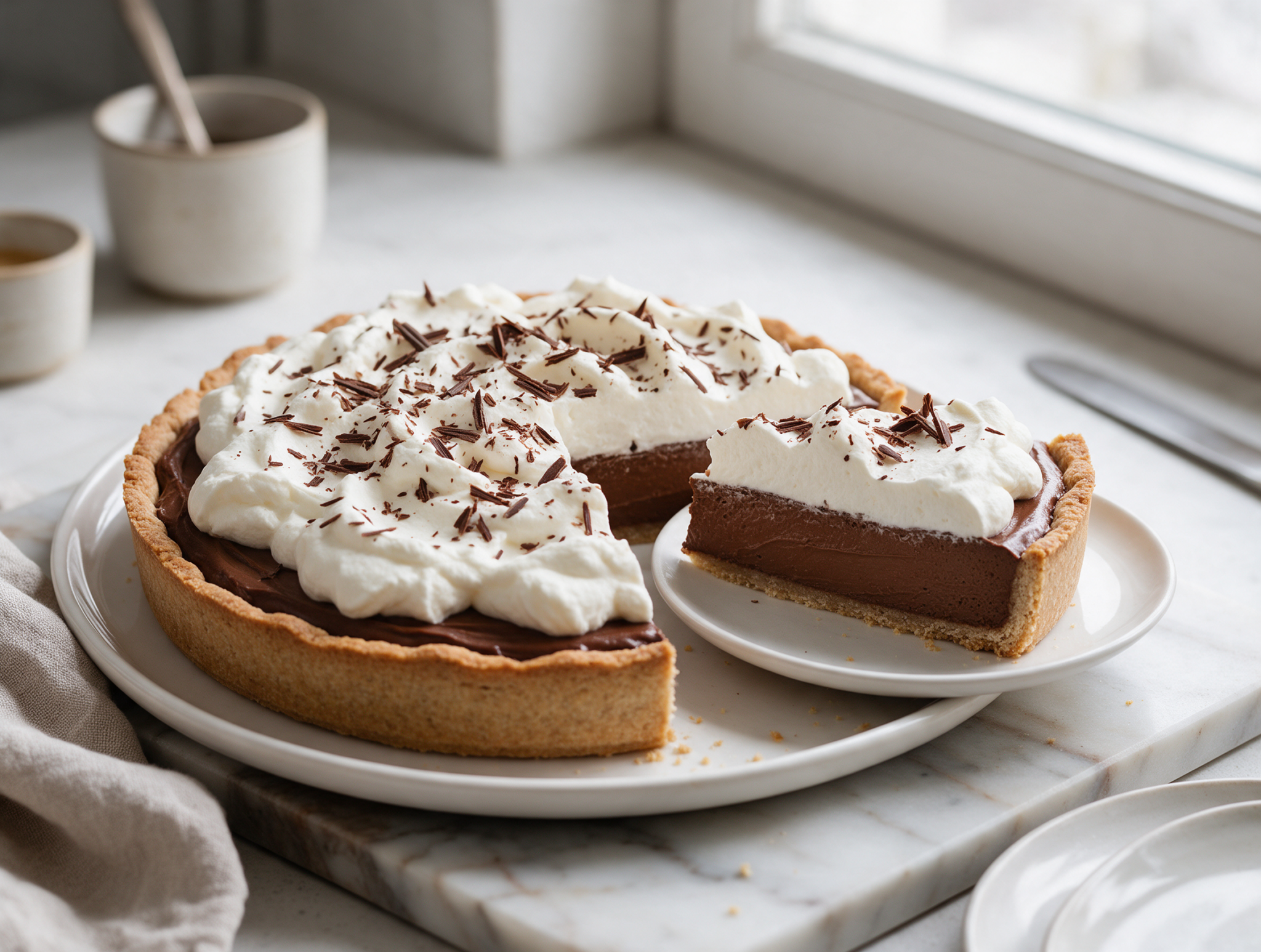
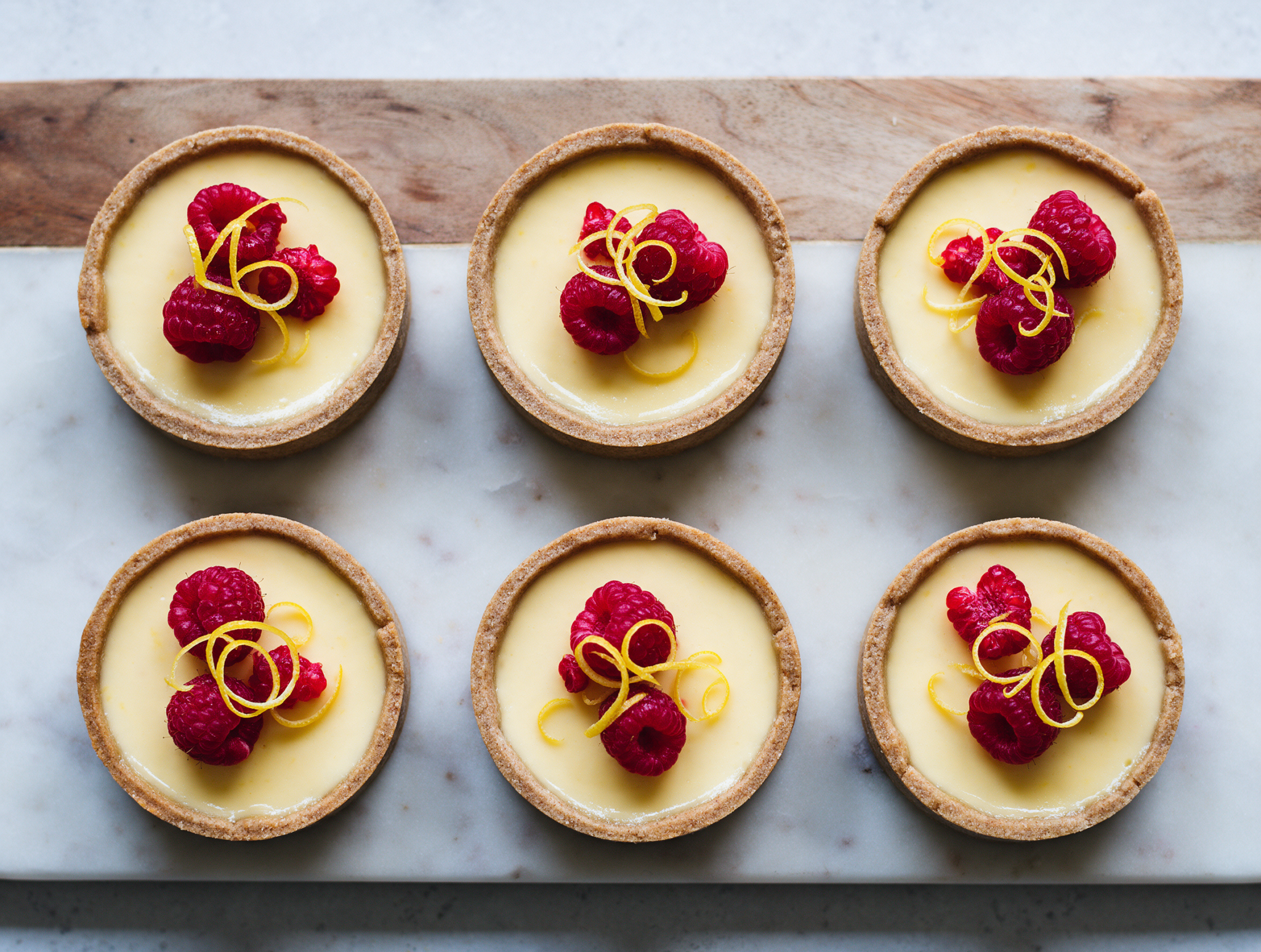
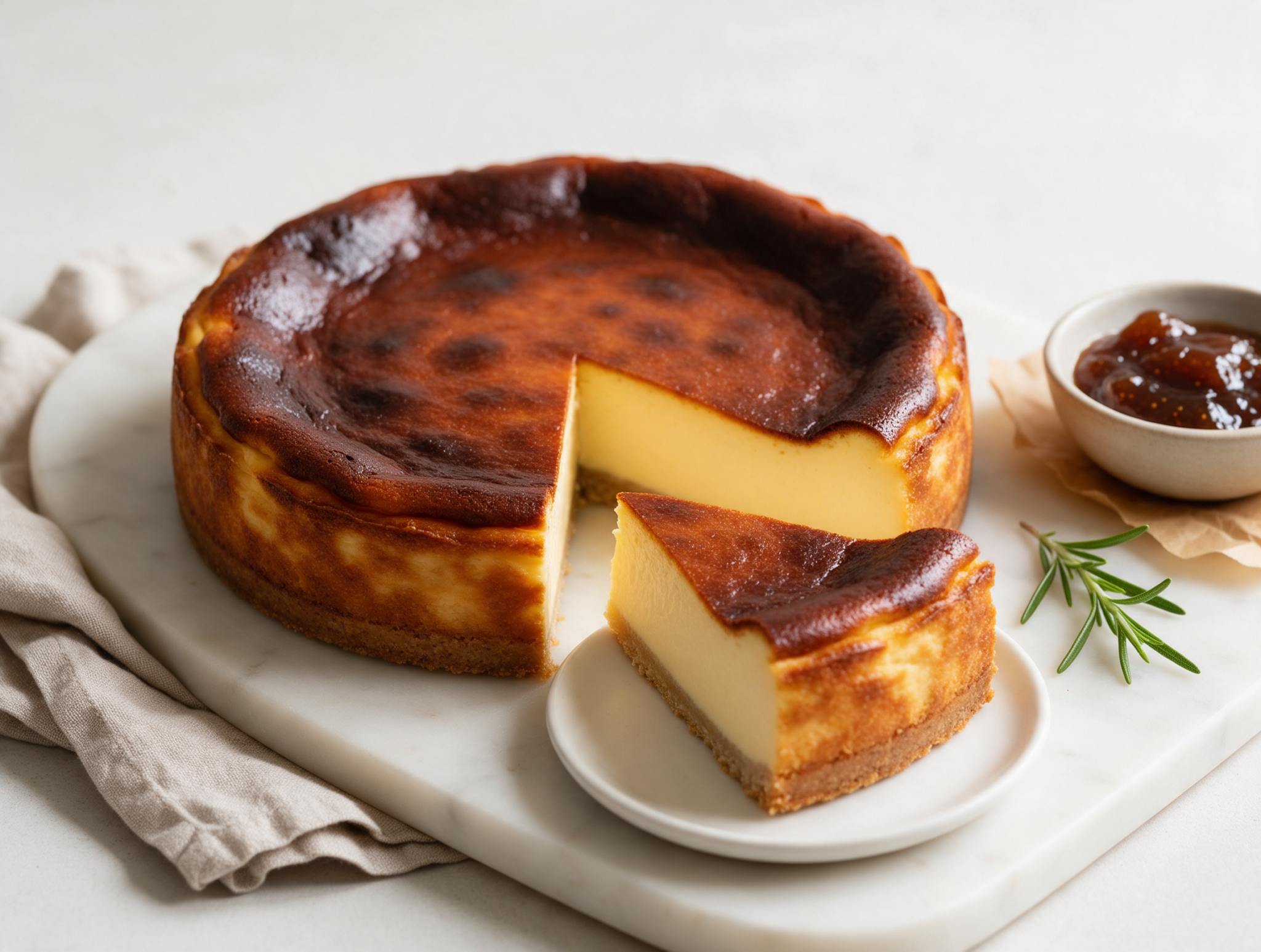
You can prepare the pastry and the custard mixture a day ahead. The baked tart keeps well in the fridge for three days and slices better cold than warm.
Why You’ll Love This Recipe
- Spelt pastry stays crisp without turning tough or crumbly
- Custard sets firmly enough to slice into clean wedges
- Pastry and filling can both be prepared a day ahead
- Five-ingredient filling with no specialist equipment needed
Ingredient Notes
- white spelt flour: White spelt gives a lighter pastry than wholegrain spelt while keeping the nutty flavour. Wholegrain spelt works but produces a denser, more crumbly shell.
- unsalted butter: Cold butter is key for a short, flaky texture. Cut it into small cubes and keep it fridge-cold until the moment you rub it in.
- egg yolks (pastry): Yolks enrich the pastry and help it hold together without over-working. One whole egg can replace two yolks if that’s easier.
- double cream: Full-fat double cream gives the custard its richness and prevents the filling from turning watery. Single cream or a 50/50 mix with whole milk produces a lighter result.
- whole milk: Whole milk keeps the custard pourable and gives a softer set. Semi-skimmed also works but the filling may be slightly less rich.
- vanilla pod: A scraped vanilla pod gives the best flavour and those visible seeds in the custard. One teaspoon of good-quality vanilla bean paste is a fair substitute.
- caster sugar: Caster sugar dissolves more evenly than granulated in a custard mixture. Light brown sugar adds a faint caramel note if you want a slightly warmer flavour.
- freshly grated nutmeg: Pre-ground nutmeg is noticeably weaker. A whole nutmeg grated straight over the filled tart takes less than a minute and makes a real difference.
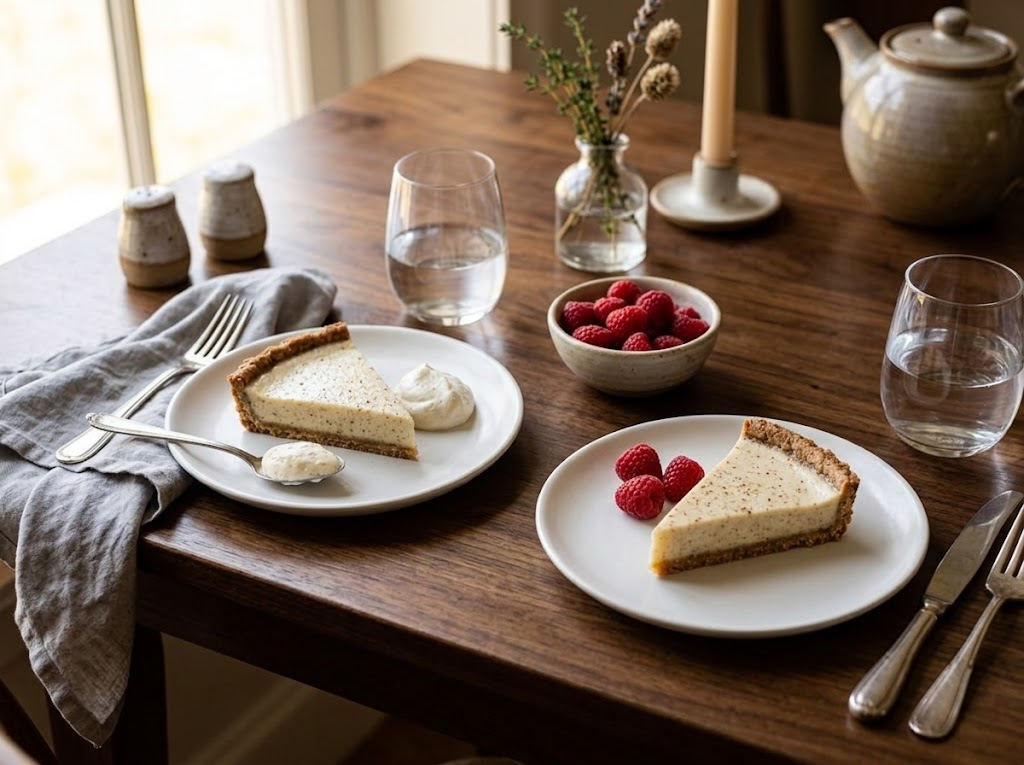
Spelt Custard Tart with Nutmeg Pastry Cream
Description
Spelt flour brings a slightly nutty depth to the pastry that plain flour can't match, and the custard filling stays soft and just set - firm enough to slice cleanly, without turning rubbery.
Ingredients
Spelt Shortcrust Pastry
Custard Filling
Instructions
Make the Pastry
- Put the spelt flour, sugar, and salt into a large bowl. Add the cold butter cubes and rub with your fingertips until the mixture looks like coarse breadcrumbs with a few larger flakes still visible.
- Add the egg yolks and one tablespoon of cold water. Mix with a fork until the dough just begins to clump together. Add the second tablespoon of water only if the dough feels dry and crumbly.
- Turn the dough onto a lightly floured surface and press into a flat disc. Wrap in beeswax wrap or cling film and refrigerate for at least 30 minutes.
- Heat the oven to 190°C / 375°F. Roll the chilled dough on a lightly floured surface to about 3 mm thickness. Carefully line a 23 cm loose-bottomed tart tin, pressing the pastry into the sides. Leave a 1 cm overhang above the rim. Refrigerate the lined tin for 20 minutes.
- Line the pastry with baking paper and fill with ceramic baking beans. Blind-bake for 18 minutes until the edges are pale gold. Remove the beans and paper and bake for a further 8 minutes until the base looks dry and feels firm to the touch. Trim the overhanging pastry with a sharp knife. Reduce the oven temperature to 150°C / 300°F.
Make and Pour the Custard
- Combine the cream, milk, and vanilla seeds and pod in a small saucepan over medium-low heat. Warm until small bubbles appear at the edges - do not boil. Remove from heat and leave to steep for 5 minutes. Discard the pod.
- Whisk the egg yolks and sugar in a bowl until the sugar dissolves and the mixture is pale, about 2 minutes. Slowly pour the warm cream mixture into the yolks, whisking constantly.
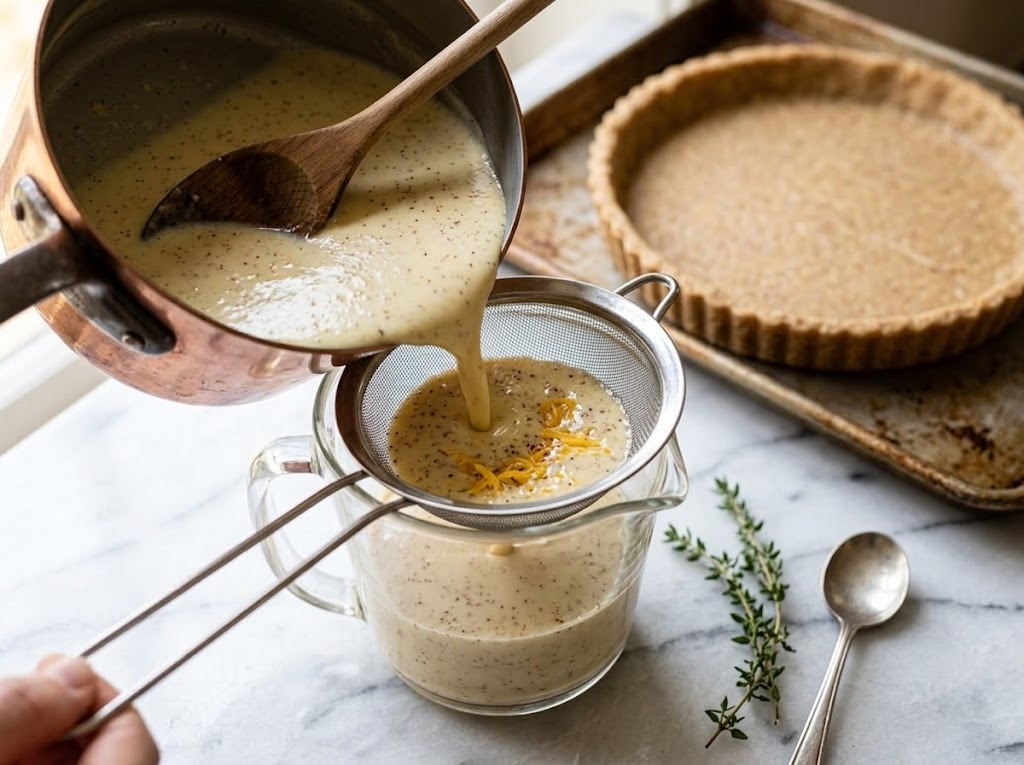
- Strain the custard through a fine-mesh sieve into a jug. Skim off any foam from the surface.
- Place the blind-baked tart shell on the oven rack, pull the rack out slightly, and carefully pour the custard into the shell until it is about 5 mm from the rim. Grate fresh nutmeg evenly over the surface.
- Slide the rack back slowly and bake at 150°C / 300°F for 28 to 32 minutes. The custard should have a slight wobble in the centre but be set around the edges. An instant-read thermometer inserted into the centre should read 78 to 82°C / 172 to 180°F.
- Remove from the oven and cool in the tin on a wire rack for 1 hour. Refrigerate for at least 1 hour before slicing for the cleanest cut.
Nutrition Facts
Servings 8
- Amount Per Serving
- Calories 320kcal
- % Daily Value *
- Total Fat 21g33%
- Saturated Fat 12g60%
- Cholesterol 215mg72%
- Sodium 75mg4%
- Potassium 130mg4%
- Total Carbohydrate 28g10%
- Dietary Fiber 2g8%
- Sugars 12g
- Protein 7g15%
- Vitamin A 820 IU
- Calcium 85 mg
- Iron 2 mg
- Vitamin D 48 IU
- Vitamin E 1.2 mg
- Vitamin K 4 mcg
- Thiamin 0.15 mg
- Riboflavin 0.3 mg
- Niacin 1.5 mg
- Vitamin B6 0.1 mg
- Folate 32 mcg
- Vitamin B12 0.6 mcg
- Phosphorus 140 mg
- Magnesium 22 mg
- Zinc 0.8 mg
* Percent Daily Values are based on a 2,000 calorie diet. Your daily value may be higher or lower depending on your calorie needs.
Note
Additional Notes
- Chill the lined tart tin for 20 minutes before blind baking to reduce shrinkage.
- Use a ceramic tart tin for even base heat and a cleaner release.
- Strain the custard through a fine-mesh sieve directly into a jug for easy pouring.
- Grate nutmeg over the surface immediately before the tart goes into the oven.
- Allow a full hour of cooling at room temperature before refrigerating for the cleanest slices.