
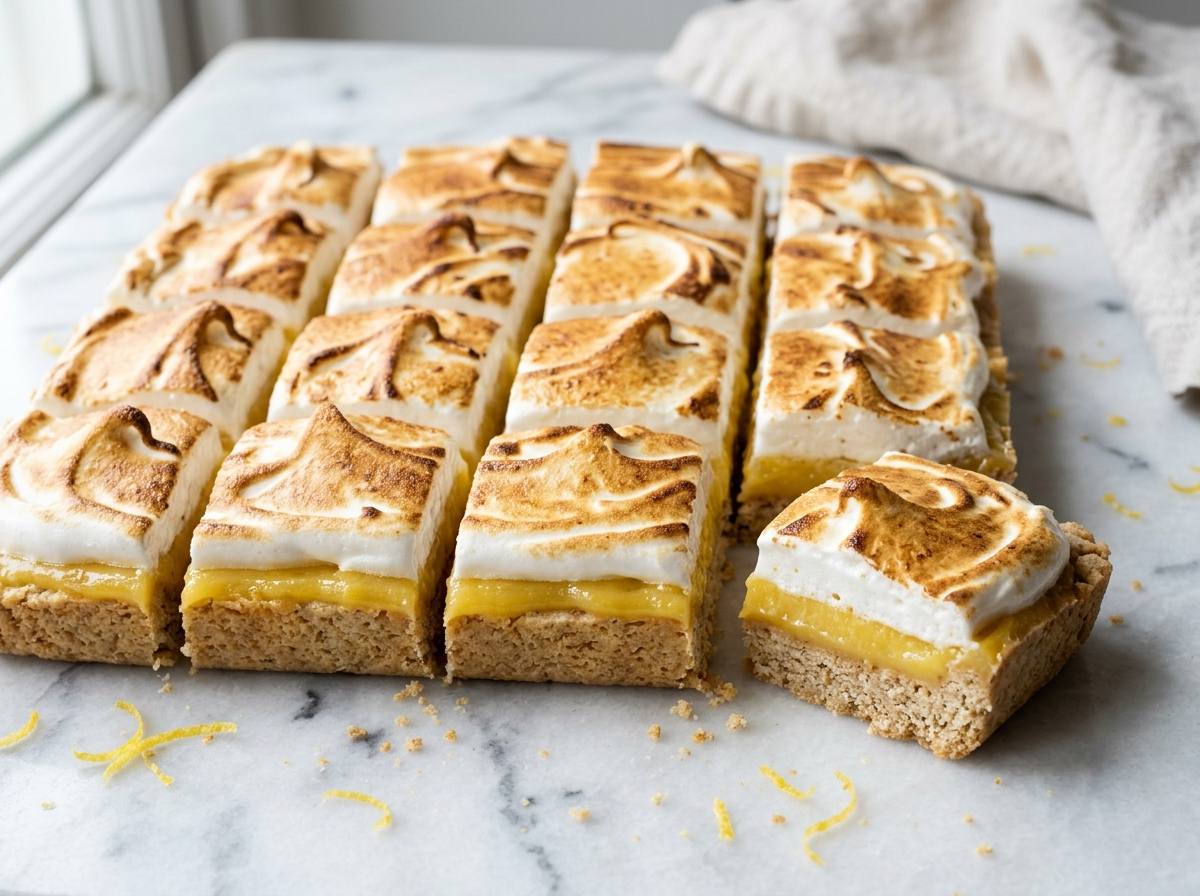
These bars take the classic lemon meringue format and press it into a baking tin, making it far easier to portion and serve than a round pie.
The base uses white spelt flour, which keeps the shortbread crisp without being brittle. It has a gentle nuttiness that balances the sharp lemon curd layer above it.
The curd is cooked on the stovetop before going into the tin, so you control the set. No surprises when it comes out of the oven.
The meringue is a simple Swiss method, whisked over a bain-marie, then spread and torched or briefly broiled. It stays stable for several hours at room temperature.
Why You’ll Love This Recipe
- Spelt base adds nutty depth plain flour lacks
- Lemon curd is pre-cooked, so the set is reliable
- Swiss meringue stays soft without weeping
- Cuts into clean bars without crumbling or collapsing
Ingredient Notes
- white spelt flour: White spelt flour gives the shortbread a light, crisp texture with a mild nutty flavour. Wholegrain spelt works but makes the base denser and slightly more crumbly.
- unsalted butter: Use cold butter cut into cubes for the base so the shortbread stays short and sandy. Dairy-free block butter works as a substitute if needed.
- lemon zest and juice: You need both zest and juice for the curd to taste bright. Use unwaxed lemons and measure the juice – about 3 to 4 medium lemons gives 120 ml.
- egg yolks: Yolks set the curd and give it richness. The reserved whites go into the meringue, so nothing is wasted.
- caster sugar: Caster sugar dissolves quickly in both the curd and the meringue. Granulated sugar is a workable substitute but whisk the meringue a little longer.
- cream of tartar: A small amount stabilises the meringue foam and helps it hold during torching. A few drops of lemon juice can substitute.
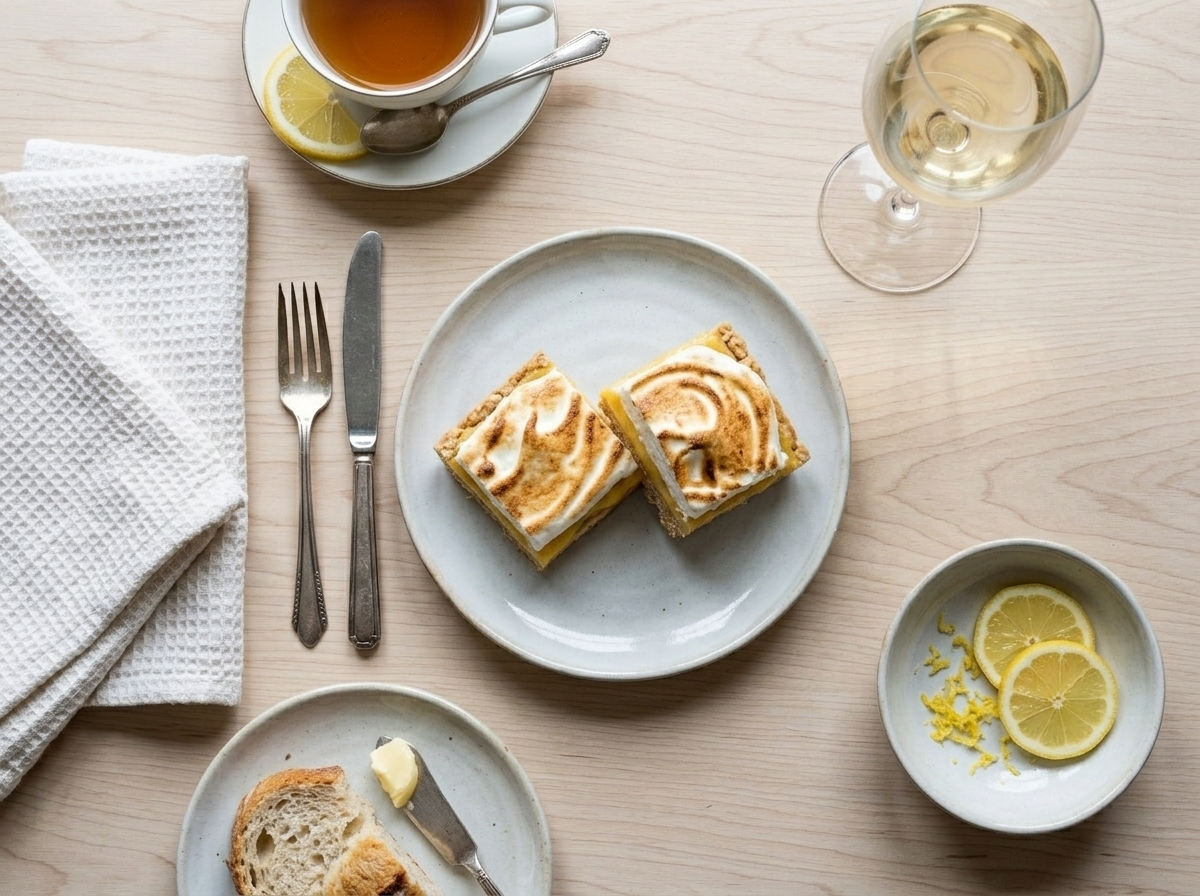
Spelt Lemon Meringue Pie Bars
Description
A spelt shortbread crust gives these bars a faintly nutty depth that plain flour can't match, supporting a tart lemon curd layer and a pillowy Swiss meringue top that holds its shape when sliced.
Ingredients
Spelt Shortbread Base
Lemon Curd Filling
Swiss Meringue
Instructions
Make the Spelt Shortbread Base
- Heat the oven to 180 C / 355 F. Line a 20 cm square baking tin with parchment paper, leaving an overhang on two sides.
- Put the spelt flour, powdered sugar, and salt in a bowl. Add the cold butter and rub together with your fingertips until the mixture looks like coarse breadcrumbs.
- Press the mixture firmly and evenly into the base of the prepared tin. If the dough feels dry, add cold water one teaspoon at a time.
- Prick the base all over with a fork, then bake for 15 to 18 minutes until pale gold and just firm to the touch. Set aside to cool slightly while you make the curd.
Make the Lemon Curd Filling
- Whisk the egg yolks, whole eggs, caster sugar, lemon juice, and lemon zest together in a medium heavy-bottomed saucepan.
- Cook over medium-low heat, stirring constantly with a wooden spoon or silicone spatula, for 8 to 10 minutes until the curd thickens enough to coat the back of the spoon.
- Remove from the heat and stir in the cubed butter one piece at a time until fully melted and smooth.
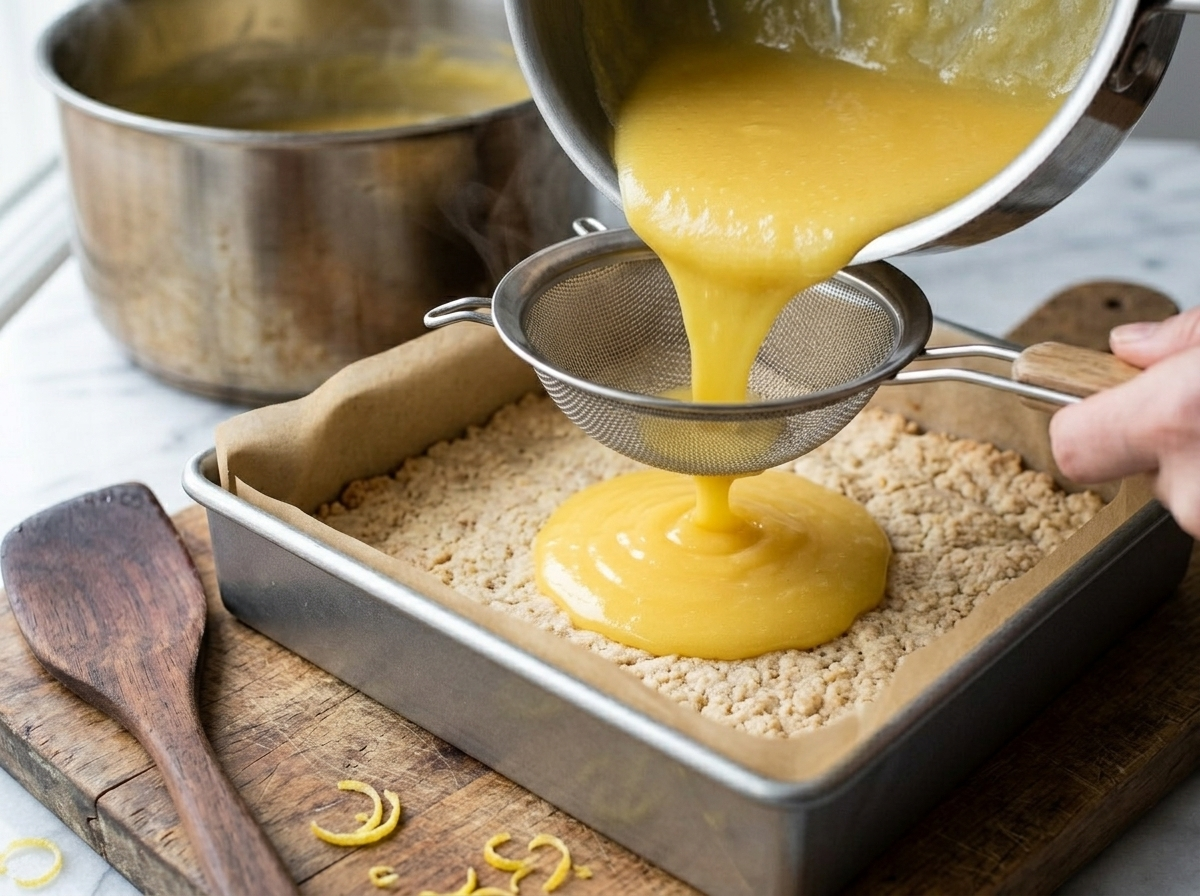
- Pour the curd through a fine-mesh sieve directly onto the warm spelt base. Smooth the surface with a spatula.
- Bake at 180 C / 355 F for 10 to 12 minutes until the curd is just set with a slight wobble in the very centre. Remove from the oven and cool completely in the tin, at least 60 minutes.
Make the Swiss Meringue and Finish
- Combine the egg whites and caster sugar in a heatproof bowl set over a pan of barely simmering water. Do not let the bowl touch the water.
- Whisk constantly until the sugar has dissolved and the mixture reaches 72 C / 160 F, about 4 to 5 minutes. The mixture should feel smooth when rubbed between your fingers.
- Remove the bowl from the heat. Add the cream of tartar, then whisk with an electric hand whisk or stand mixer on high speed for 5 to 7 minutes until stiff, glossy peaks form.
- Spoon the meringue over the cooled curd layer and spread to the edges. Use the back of a spoon to create soft swirls and peaks.
- Toast the meringue with a kitchen torch until golden in patches, or place under a broiler for 2 to 3 minutes, watching closely to avoid burning.
- Lift the bars out of the tin using the parchment overhang. Cut into 16 squares with a sharp knife, wiping the blade clean between cuts.
Nutrition Facts
Servings 16
- Amount Per Serving
- Calories 215kcal
- % Daily Value *
- Total Fat 10g16%
- Saturated Fat 6g30%
- Cholesterol 80mg27%
- Sodium 45mg2%
- Potassium 55mg2%
- Total Carbohydrate 30g10%
- Dietary Fiber 1g4%
- Sugars 22g
- Protein 3g6%
- Vitamin A 340 IU
- Vitamin C 4 mg
- Calcium 18 mg
- Iron 1 mg
- Vitamin D 18 IU
- Vitamin E 0.5 mg
- Vitamin K 2 mcg
- Thiamin 0.1 mg
- Riboflavin 0.1 mg
- Niacin 0.8 mg
- Vitamin B6 0.05 mg
- Folate 12 mcg
- Vitamin B12 0.2 mcg
- Phosphorus 60 mg
- Magnesium 12 mg
- Zinc 0.4 mg
* Percent Daily Values are based on a 2,000 calorie diet. Your daily value may be higher or lower depending on your calorie needs.
Note
Additional Notes
- Blind bake the spelt base for 15 minutes until pale gold before adding curd.
- Strain the curd through a fine-mesh sieve for a smooth, even layer.
- Cool curd layer completely before spreading meringue to prevent collapse.
- Whisk Swiss meringue to stiff, glossy peaks before it goes on the bars.
- Wipe the knife clean between cuts for neat, bakery-style slices.