Easy Oven-Baked Za’atar Spelt Manakish with Labneh

Servings: 4 Total Time: 1 hr 32 mins Difficulty: Medium
Soft spelt flatbread topped with za'atar and cool labneh
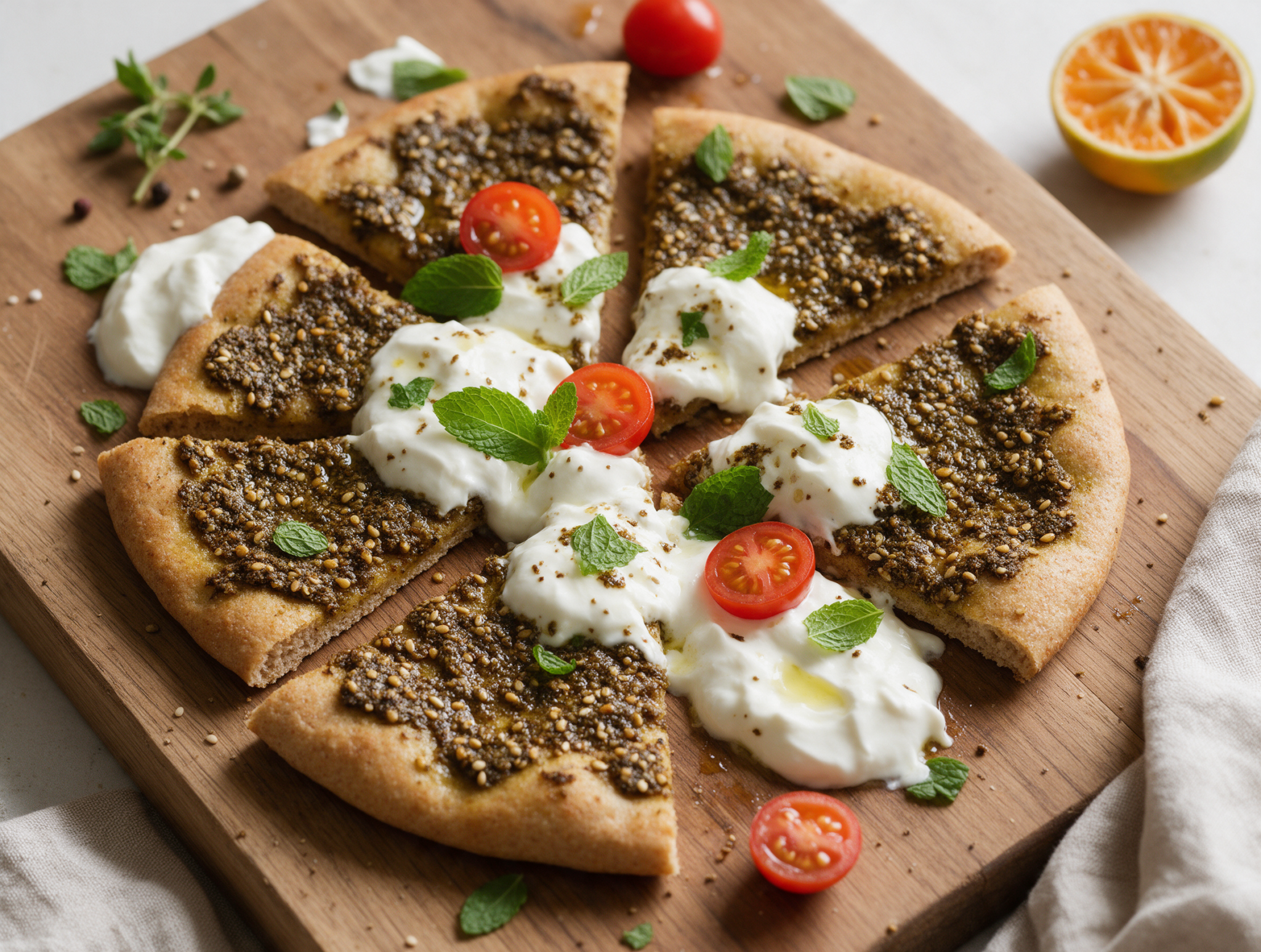
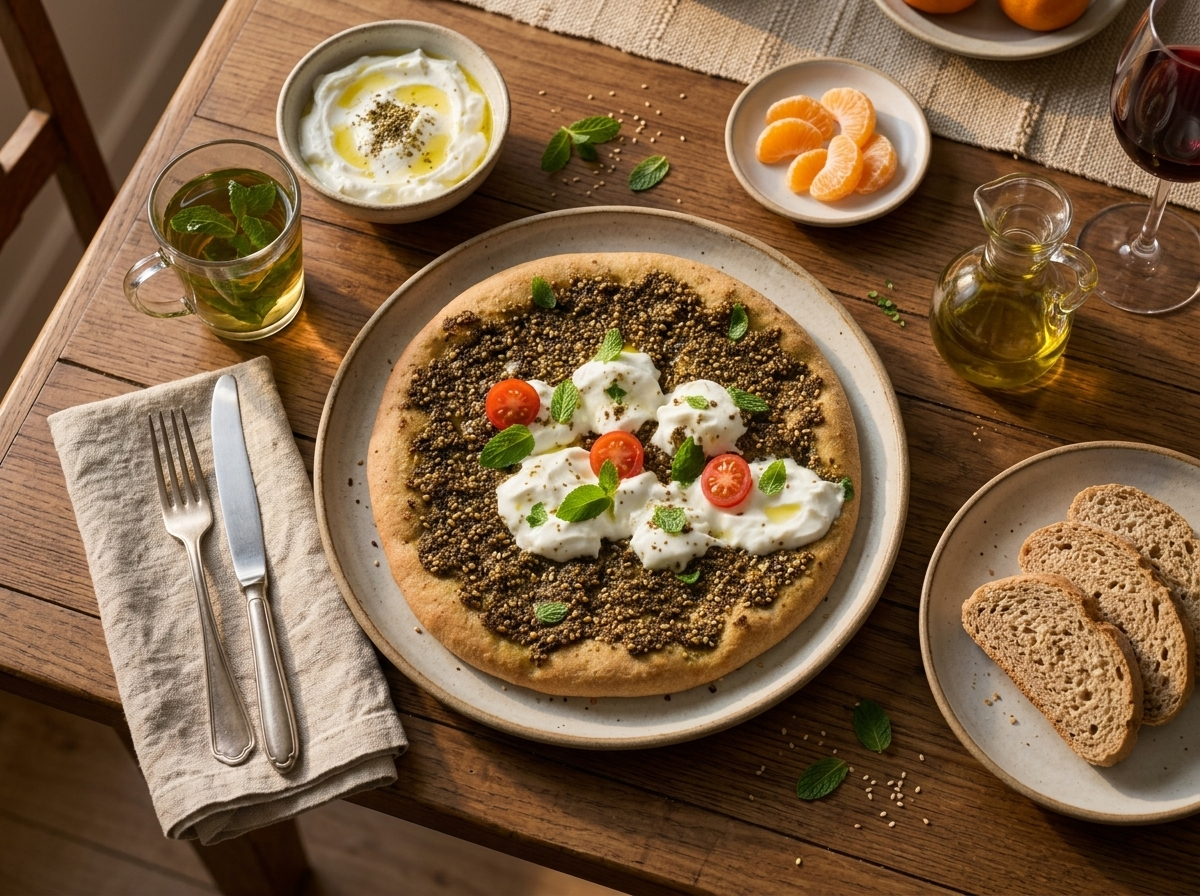
Golden za'atar spelt manakish wedges on a wooden board, topped with dollops of labneh and fresh mint leaves. View Gallery 2 photos

Za’atar spelt manakish is a Middle Eastern flatbread topped with a thick paste of za’atar and olive oil, baked until the edges turn golden and puffed. Made with spelt flour, the dough stays soft yet holds its shape once baked. Labneh goes on after baking, giving each piece a cool, tangy contrast to the warm bread.

Spelt flour behaves differently from regular wheat flour. It takes up less water, so the dough can turn sticky fast if you add too much liquid.

This version bakes at 220 C / 425 F for 10 to 12 minutes on a preheated sheet pan. The high heat keeps the base from turning soggy under the oil-heavy topping.

You can make the dough a day ahead and keep it in the fridge, which gives the flavor time to develop. Roll, top and bake it fresh whenever you’re ready to eat.

Why You’ll Love This Recipe

  • Dough comes together in one bowl, no mixer needed
  • Spelt flour gives a nutty flavor and soft chew
  • Za’atar and olive oil topping stays simple, no cooking
  • Labneh adds a cool, tangy finish after baking
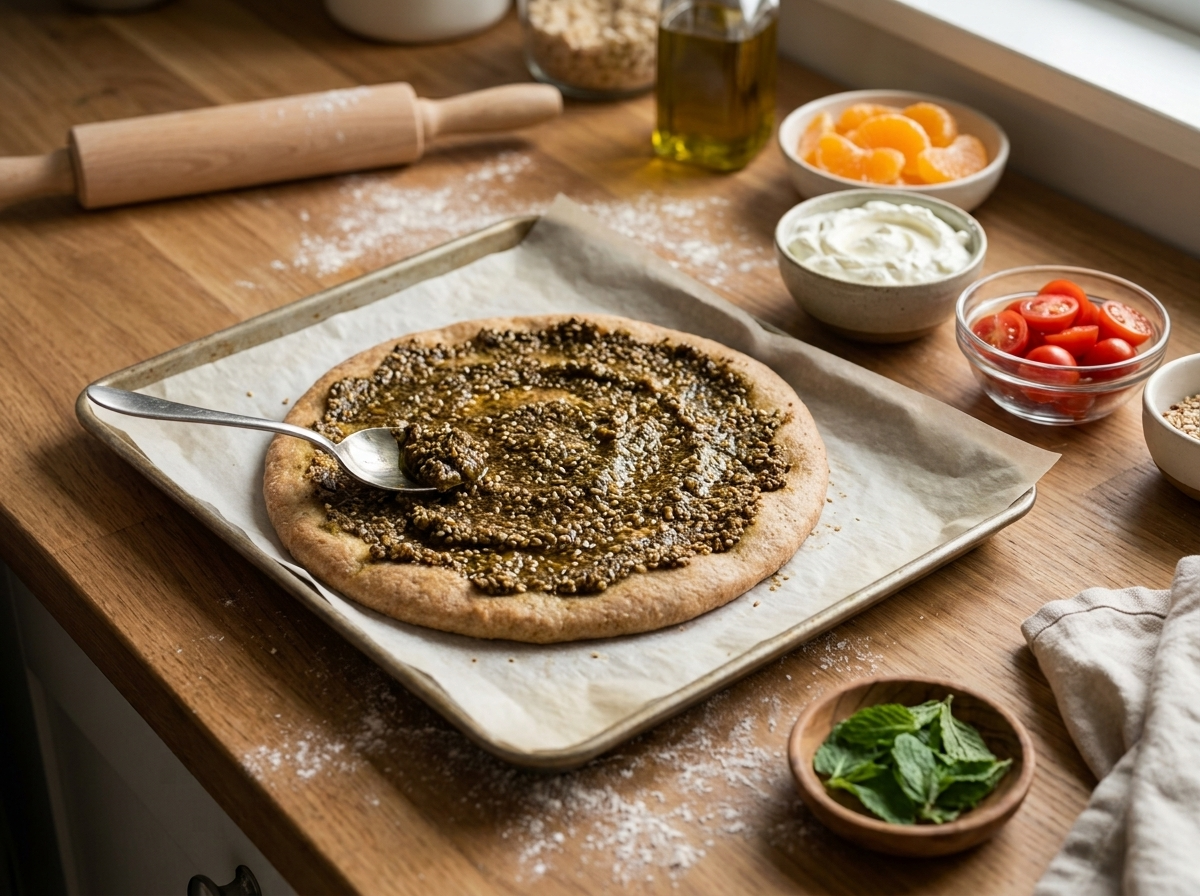
Hands spreading a thick za'atar and olive oil paste over rolled spelt dough rounds on a parchment-lined tray.

Ingredient Notes

  • spelt flour: Use light or whole spelt flour. Whole spelt gives a denser, nuttier bread, while light spelt bakes closer to a regular flatbread.
  • za’atar: Look for a blend with sumac, thyme and sesame. Homemade za’atar works too, just check it isn’t too salty before adding extra salt to the dough.
  • labneh: Labneh is strained yogurt with a thick, spreadable texture. Plain Greek yogurt works in a pinch, though it’s thinner and more tangy.
  • olive oil: Use a decent extra-virgin olive oil for the topping since it’s a main flavor here, not just a cooking fat.
  • instant yeast: Instant yeast skips a separate proofing step. If you only have active dry yeast, dissolve it in the warm water first and wait 5 minutes until foamy.
A woman tearing a warm manakish wedge at a rustic kitchen table set with olive oil and mint tea.

Easy Oven-Baked Za’atar Spelt Manakish with Labneh

Difficulty: Medium Prep Time 25 mins Cook Time 12 mins Rest Time 55 mins Total Time 1 hr 32 mins
Cooking Temp: 220  C Servings: 4 Estimated Cost: £ 1.80 Calories: 400

Description

Oven-baked spelt manakish topped with a thick za'atar and olive oil paste, then finished with cool labneh once out of the oven.

Ingredients

Cooking Mode Disabled

Dough

Za'atar Topping

To Serve

Instructions

Make the Spelt Dough

  1. Stir the warm water, sugar and instant yeast together in a small bowl. Let it sit for 5 minutes until foamy on top.
  2. Combine the spelt flour and salt in a large mixing bowl. Pour in the yeast mixture and olive oil, then mix until a rough dough forms.
  3. Knead the dough on a lightly floured surface for 6 to 8 minutes until smooth and slightly tacky, not sticky. Spelt dough tightens up fast, so add flour a tablespoon at a time only if it's spreading rather than holding shape.
  4. Place the dough in a lightly oiled bowl, cover with a kitchen towel, and let it rise for 45 minutes, until roughly doubled.

Shape and Top the Manakish

  1. Heat the oven to 220 C / 425 F with the sheet pan (33 x 46 cm / 13 x 18 inch) inside to preheat.
  2. Punch down the dough and divide it into 4 equal pieces. Shape each into a ball and let rest for 10 minutes, covered.
  3. Roll each ball into a round about 18 cm / 7 inches across and 5 mm thick. Transfer to a sheet of parchment paper.
  4. Mix the za'atar and 3 tbsp olive oil into a thick paste. Spread it evenly over each round, leaving a 1 cm border, then press dimples into the dough with your fingertips so the topping doesn't pool.

Bake and Serve

  1. Carefully slide the topped rounds, with the parchment, onto the hot sheet pan. Bake for 10 to 12 minutes, until the edges are golden brown and puffed.
  2. Let the manakish cool for 2 to 3 minutes on the pan. Spread a spoonful of labneh over each one while it's still warm.
  3. Drizzle with the remaining 1 tbsp olive oil and scatter with mint or parsley and halved cherry tomatoes, if using. Cut into wedges and serve warm.

Nutrition Facts

Servings 4


Amount Per Serving
Calories 400kcal
% Daily Value *
Total Fat 25g39%
Saturated Fat 5g25%
Cholesterol 15mg5%
Sodium 650mg28%
Potassium 220mg7%
Total Carbohydrate 56g19%
Dietary Fiber 5g20%
Sugars 3g
Protein 12g24%

Vitamin A 150 IU
Vitamin C 2 mg
Calcium 90 mg
Iron 2.5 mg
Vitamin E 2 mg
Vitamin K 8 mcg
Thiamin 0.2 mg
Riboflavin 0.15 mg
Niacin 3 mg
Vitamin B6 0.15 mg
Folate 30 mcg
Vitamin B12 0.2 mcg
Phosphorus 150 mg
Magnesium 40 mg
Zinc 1.2 mg

* Percent Daily Values are based on a 2,000 calorie diet. Your daily value may be higher or lower depending on your calorie needs.

Note

Additional Notes

  • Preheat the sheet pan at least 10 minutes before baking for a crisp base.
  • Dimple the dough with your fingers so the za'atar paste doesn't pool in the center.
  • Add labneh only after the manakish comes out of the oven, never before.
  • Dough can rest in the fridge overnight for a deeper, tangier flavor.
Keywords: za'atar manakish, spelt flatbread, labneh recipe, middle eastern flatbread, za'atar bread, spelt manakish

Equipment

  • large mixing bowl
  • sheet pan 33 x 46 cm / 13 x 18 inch
  • rolling pin
  • pastry brush
  • kitchen towel or plastic wrap

Tips

  • Weigh the spelt flour instead of using cups for a dough that isn't too dry or sticky.
  • Let the dough rest a full 45 minutes so it puffs properly once it hits the oven.
  • Preheat the sheet pan before baking so the base crisps instead of steaming under the topping.
  • Dimple the dough with your fingertips before adding the za'atar paste to stop it pooling in the middle.
  • Add labneh only after the manakish comes out of the oven so it stays cool and thick.

Variations

  • Add crumbled feta or halloumi under the za'atar paste for a saltier, cheese-topped version of manakish.
  • Swap half the labneh for hummus if you want a heavier, more protein-rich spread on top.
  • Top with sliced cherry tomatoes and fresh mint after baking for a brighter, summer version of this flatbread.

Storage and Reheating

Store baked manakish without labneh in an airtight container at room temperature for 2 days, or in the fridge for up to 4 days. Keep the labneh separate in its own container.

To reheat, warm the plain manakish in a 180 C / 350 F oven for 4 to 5 minutes, or in a dry skillet for 1 to 2 minutes per side, until warm and slightly crisp again. Add the labneh fresh after reheating, not before.

The raw dough freezes well. Shape and top with the za'atar paste, then freeze flat on a tray before baking straight from frozen, adding 3 to 4 extra minutes to the bake time.

Serving Suggestions

Serve za'atar spelt manakish warm, straight from the oven, with a generous spoonful of labneh on top. A drizzle of olive oil and a scatter of fresh mint or parsley finishes each piece.

For a fuller spread, add sliced cucumber, tomato wedges and olives on the side. This turns the manakish into a simple mezze board for a casual lunch or brunch.

Cut each round into wedges if you're serving a group, so everyone gets a piece with both the crisp edge and the soft center.

Frequently Asked Questions

Expand All:

Why is my za'atar spelt manakish soggy in the middle instead of crisp?

A soggy center usually means the oven wasn't hot enough or the sheet pan wasn't preheated before baking. Bake at 220 C / 425 F on a hot pan for 10 to 12 minutes, and dimple the dough before adding the za'atar paste so oil doesn't pool in one spot.

Can I use regular yogurt instead of labneh on manakish?

Yes, plain Greek yogurt works instead of labneh, though it's thinner and more tangy. Strain it through a cheesecloth-lined sieve for an hour first if you want it closer to labneh's thick, spreadable texture. Skip flavored or low-fat yogurt, since it turns watery once warm.

Can I freeze za'atar spelt manakish dough before baking?

Yes, shape the dough into rounds, top with the za'atar paste, then freeze flat on a tray until solid. Transfer to a bag and bake straight from frozen at 220 C / 425 F, adding 3 to 4 extra minutes. Add labneh only after baking, never before freezing.

What goes well with za'atar spelt manakish besides labneh?

Cucumber, tomato wedges and olives round out za'atar spelt manakish into a simple mezze plate. A soft-boiled egg or a bowl of hummus works well too, if you want more protein at the table. Fresh mint adds a cool, sharp note once the bread comes out of the oven.

Is za'atar spelt manakish gluten-free?

No, za'atar spelt manakish is not gluten-free since spelt is a wheat relative and contains gluten. Swapping in a 1:1 gluten-free flour blend can work, though the dough will feel stickier and the finished bread turns denser. Anyone with celiac disease should avoid this recipe as written.

What's the difference between spelt manakish and regular wheat manakish?

Spelt manakish has a nuttier flavor and a slightly denser chew than manakish made with regular wheat flour. Spelt also absorbs less water, so the dough needs less liquid to reach the same soft texture. Both bake the same way, just watch the spelt dough closely so it doesn't dry out.

Min
Share it on your social network