Servings 4
- Amount Per Serving
- % Daily Value *
- Total Fat 25g39%
- Saturated Fat 17g85%
- Cholesterol 120mg40%
- Sodium 1050mg44%
- Potassium 600mg18%
- Total Carbohydrate 54g18%
- Dietary Fiber 6g24%
- Sugars 5g
- Protein 25g50%
- Vitamin A 500 IU
- Vitamin C 12 mg
- Calcium 90 mg
- Iron 3.5 mg
- Vitamin E 2 mg
- Vitamin K 20 mcg
- Thiamin 0.3 mg
- Riboflavin 0.2 mg
- Niacin 6 mg
- Vitamin B6 0.3 mg
- Folate 50 mcg
- Vitamin B12 1 mcg
- Phosphorus 330 mg
- Magnesium 90 mg
- Zinc 3 mg
* Percent Daily Values are based on a 2,000 calorie diet. Your daily value may be higher or lower depending on your calorie needs.
Note
Additional Notes
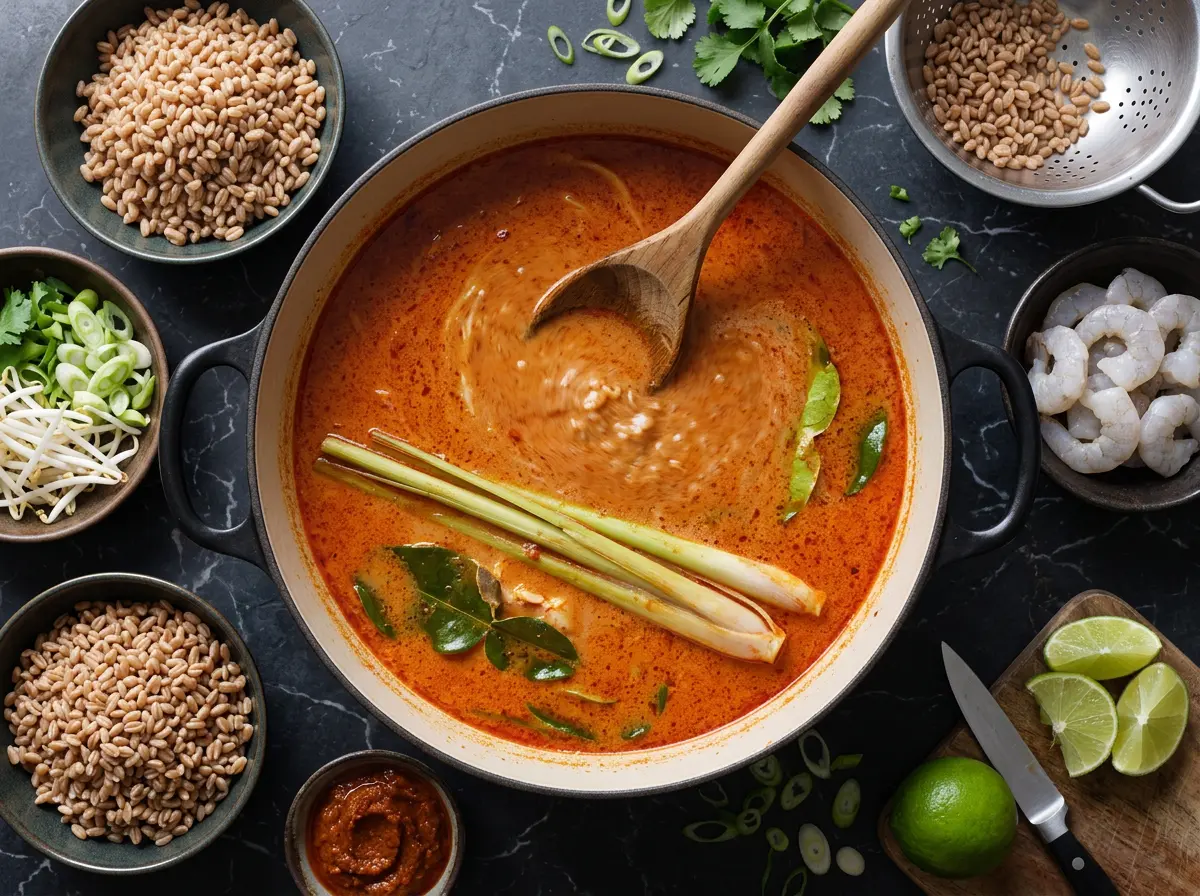
- Bruise the lemongrass with the back of a knife and remove it before serving.
- Use full-fat coconut milk. Light versions give a thin broth that tastes diluted.
- Check the laksa paste label for vegetarian bowls, since many contain shrimp paste.
- Rinse cooked spelt noodles briefly in warm water to remove surface starch.
Keywords:
spelt laksa, laksa noodle bowl, spelt noodles recipe, coconut curry noodle soup, shrimp laksa
Equipment
- 4-quart / 3.8 L soup pot
- 3-quart / 2.8 L pot for the noodles
- colander
- ladle
- chef's knife and cutting board
Tips
- Cook the spelt noodles in a separate pot and drain them just before serving, so they stay firm instead of softening in the broth.
- Fry the laksa paste in oil for 2 minutes before adding liquid, until the oil separates at the edges and the paste smells toasted.
- Keep the broth at a gentle simmer once the coconut milk goes in, with small bubbles only, to keep the texture smooth.
- Pat the shrimp dry and add them last, simmering 3 minutes until pink and curled and 63 C / 145 F inside.
- Taste the broth after adding lime juice and adjust with fish sauce or a pinch of salt, since laksa pastes vary in saltiness.
Variations
- Swap the shrimp for 200 g cubed firm tofu, use soy sauce for fish sauce, and check that your laksa paste has no shrimp paste.
- Add two handfuls of baby spinach or sliced bok choy to the broth with the shrimp for extra greens and a softer bite.
- Top each bowl with a halved egg boiled for 7 minutes, which adds protein and a creamy yolk that blends into the broth.
Storage and Reheating
Laksa broth stays well in the fridge. Cool the broth made without shrimp, cover it, and keep it for up to 4 days. Cooked leftovers that already contain shrimp keep for 2 days.
Store cooked noodles separately, tossed with 1 tsp oil, for up to 3 days. Keep bean sprouts, herbs, and lime apart as well, so they stay crisp. Reheat the broth in a pot over medium-low heat for 6 to 8 minutes until steaming, stirring so the coconut milk stays smooth.
Add raw shrimp to the reheated broth and simmer for 3 minutes. Dip the cold noodles in the hot broth for 30 to 60 seconds, then ladle everything into bowls. The broth freezes for up to 2 months without shrimp or noodles. Thaw it overnight in the fridge and whisk as it heats.
Serving Suggestions
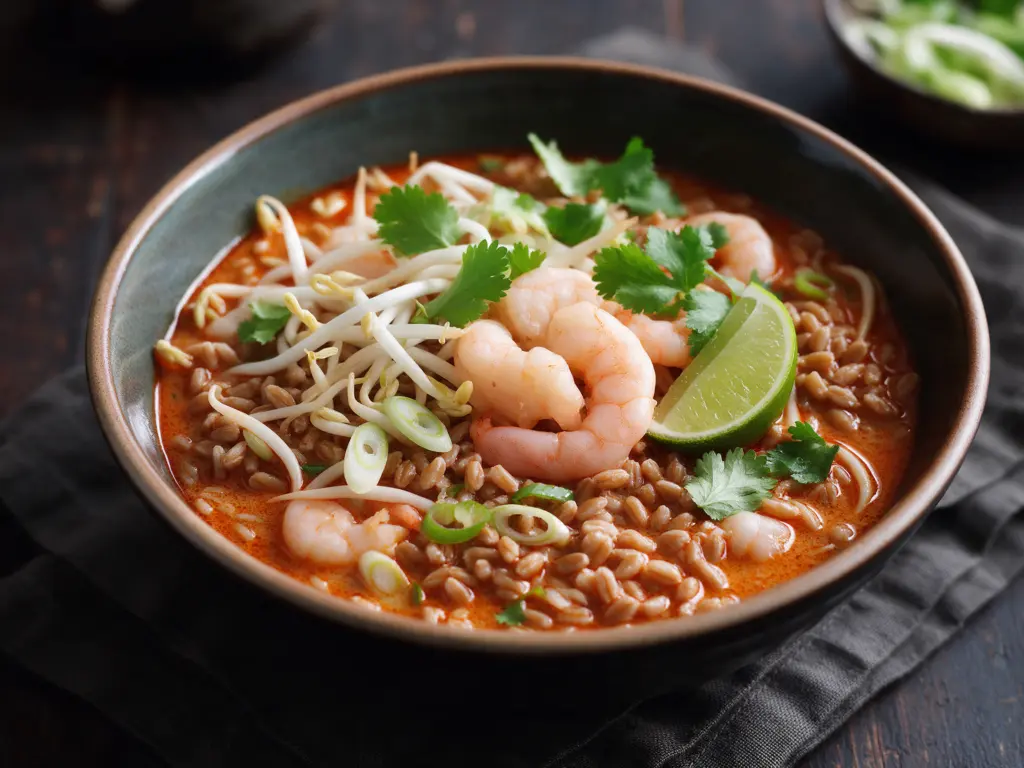
Serve the laksa in deep bowls, with the noodles at the bottom and the shrimp on top. Add the sprouts, spring onions, and coriander at the table so they stay crisp and bright.
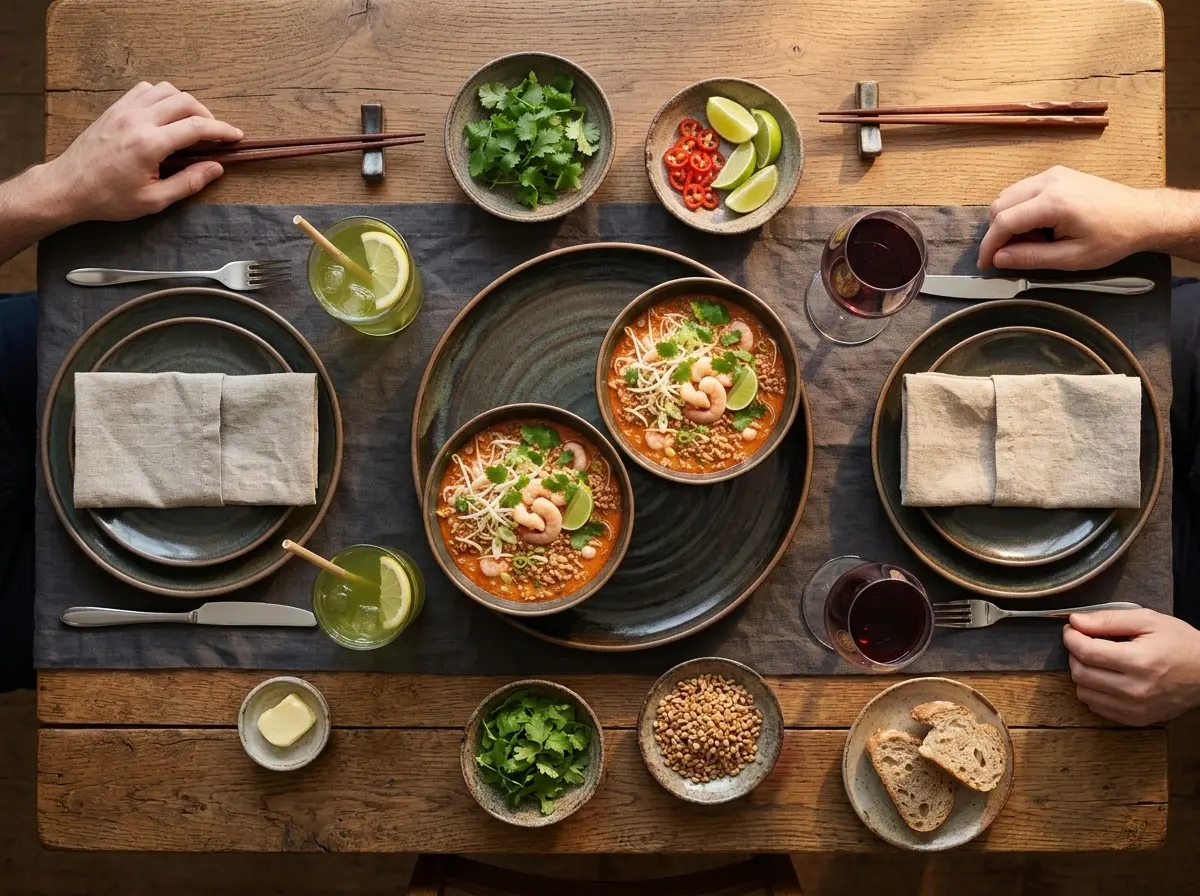
A cucumber salad dressed with rice vinegar and a pinch of sugar sits well beside the warm broth. Vegetable spring rolls or steamed edamame make the meal larger for a family table.
For a casual gathering, set out the toppings in small bowls and let everyone build their own. The broth stays hot in the pot over low heat, and the noodles can be portioned into bowls ahead of time.